We chose to do one thing.

OKC Reef is an Oklahoma City company built around saltwater reef aquariums, and only saltwater reef aquariums.

Doing everything was the obvious choice.

Start an aquarium service company, and the obvious move is to take every tank that calls: freshwater, ponds, fish-only systems, whatever’s on the schedule. More tanks, more calls.

We went the other way.

A reef isn’t just a harder aquarium. It’s its own discipline: carbonate chemistry, nutrient balance, coral biology, lighting, flow, and equipment that all depend on each other. Doing it well takes a kind of attention that’s hard to keep when the next appointment is a pond.

So OKC Reef does one thing.

Reef Aquariums. It’s All We Do.

What doing one thing changes

It changes what we notice on a visit, what we know to ask, and what we leave alone because it’s working.

It changes what we turn down. We don’t service freshwater aquariums, ponds, or fish-only systems. We don’t move aquariums. We don’t do one-off cleanings. Those are all legitimate services. Turning them down is how we keep our attention on reefs.

And it changes the relationship. We’re built around ongoing care, because reefs stay healthy through consistency, not occasional visits.

Who’s behind OKC Reef

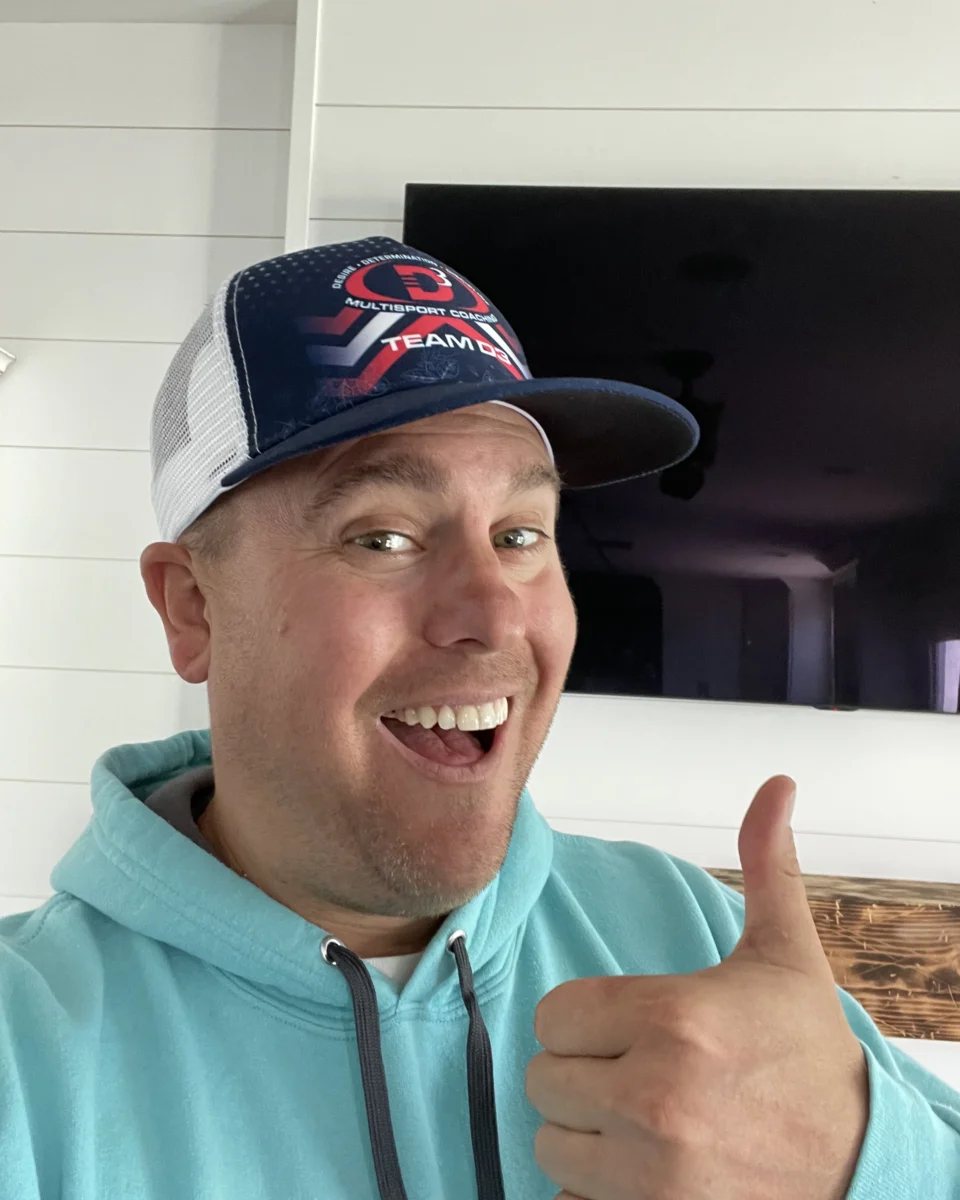
Brett Baker, Founder

Brett Baker

Founder

30+ years of reefkeeping, including marine livestock wholesale, three national online reef retailers, two large aquarium maintenance companies, field experience with marine livestock collectors, and underwater maintenance of large public aquarium exhibits.

Brett has spent more than 30 years in the reef aquarium world. What started as a childhood hobby eventually took him through nearly every side of the industry, from marine livestock wholesalers in Los Angeles to building and operating three national online reef retailers and two large aquarium maintenance companies.

Along the way, reefkeeping has taken him well beyond the aquarium. He’s traveled to Hawaii to see where aquarium fish and coral were historically collected, scuba dived alongside collectors, and even gone underwater to maintain exhibits at large public aquariums.

These days, Brett believes the future of reefkeeping is aquaculture. The goal isn’t simply to keep incredible animals in glass boxes. It’s to become better stewards of them, support sustainable ways of growing and raising them, and take responsibility for the animals already in our care.
A career spent on every side of the glass

Brett started keeping reefs as a kid and never really stopped. Over more than thirty years, his work has taken him through much of the reef aquarium world: marine livestock wholesale in Los Angeles, three national online reef retailers, and two large aquarium maintenance companies in major metropolitan markets.

He’s also seen where the animals come from. In Hawaii, during the years when aquarium collection happened there, he saw fish and coral collection operations firsthand and dove with the collectors. He’s done underwater maintenance in very large public aquarium systems, too.

And, somehow, polar bears.

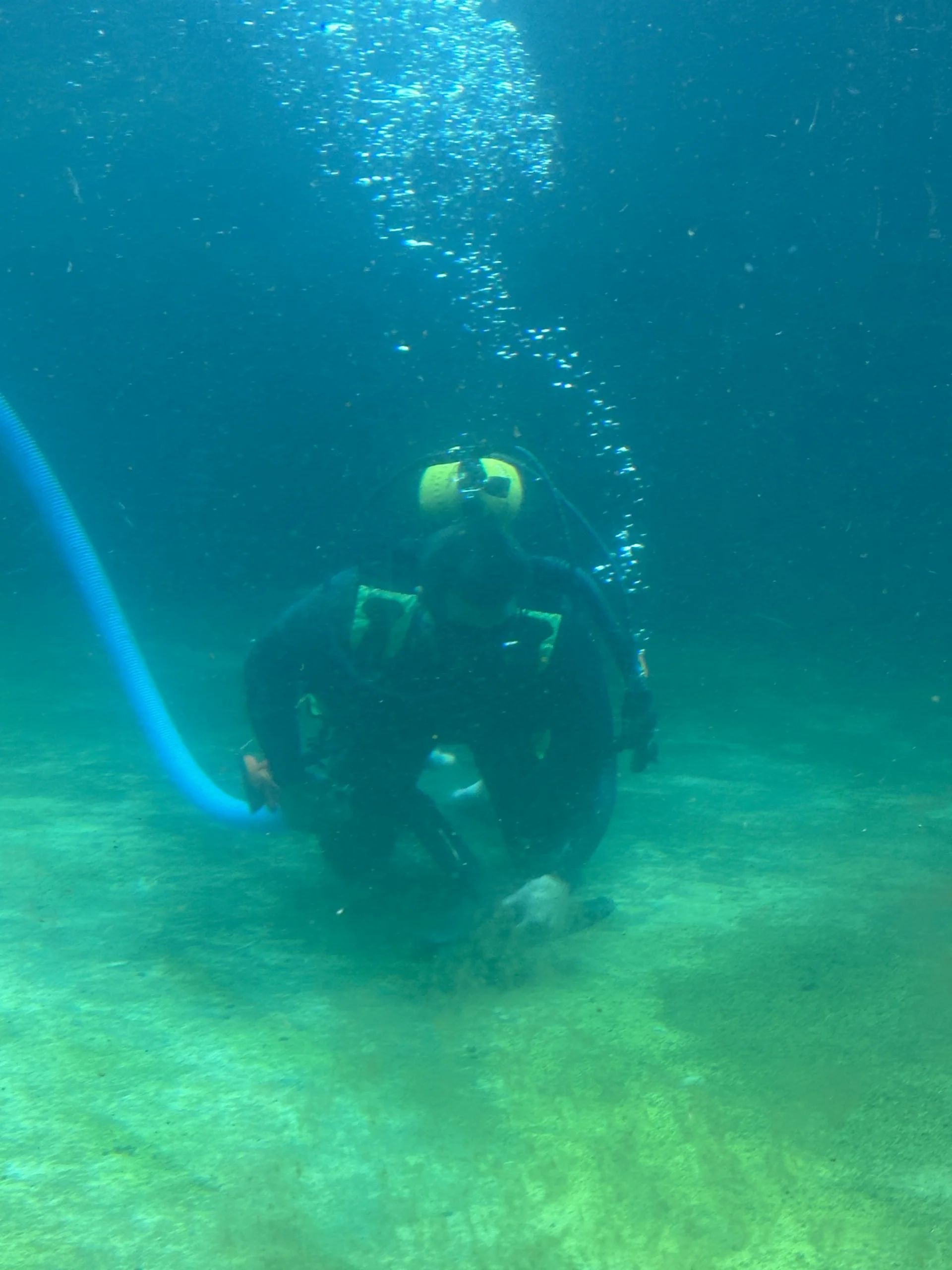
Brett scuba diving inside a polar bear enclosure in Alaska
Yes. That actually happened.

Not everything Brett has maintained underwater had gills. In Alaska, he once scuba dove to clean a polar bear enclosure. It has nothing to do with coral husbandry. It’s just what happens when you spend a career in and around aquariums.

Still keeping reefs, not just remembering them

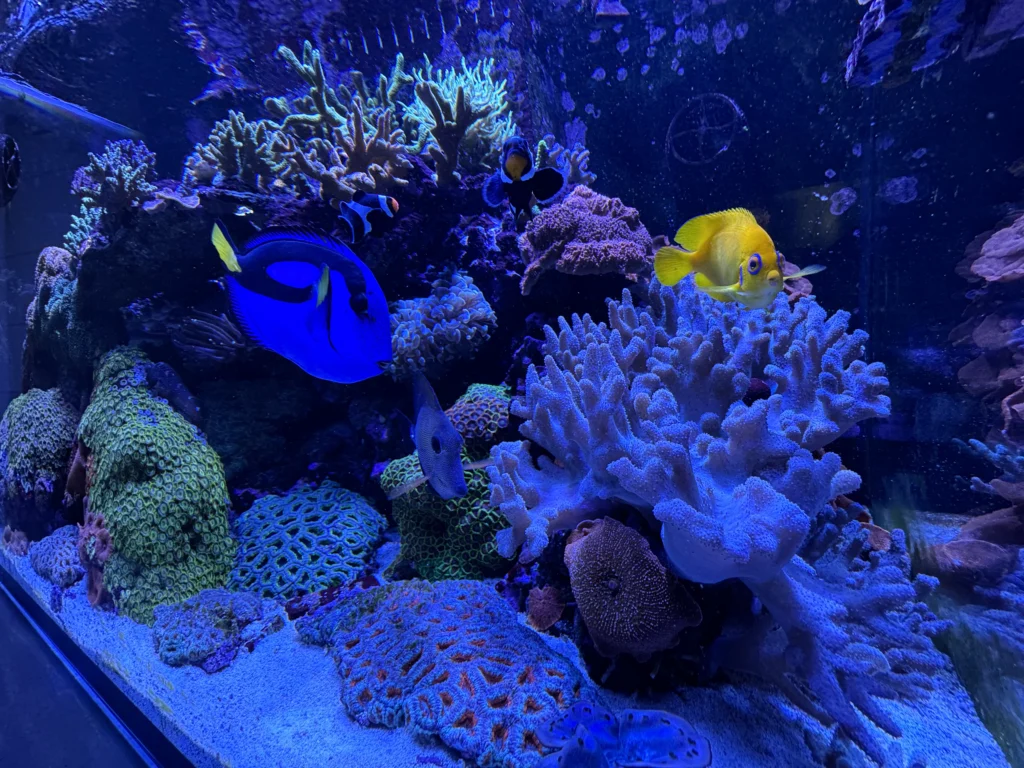
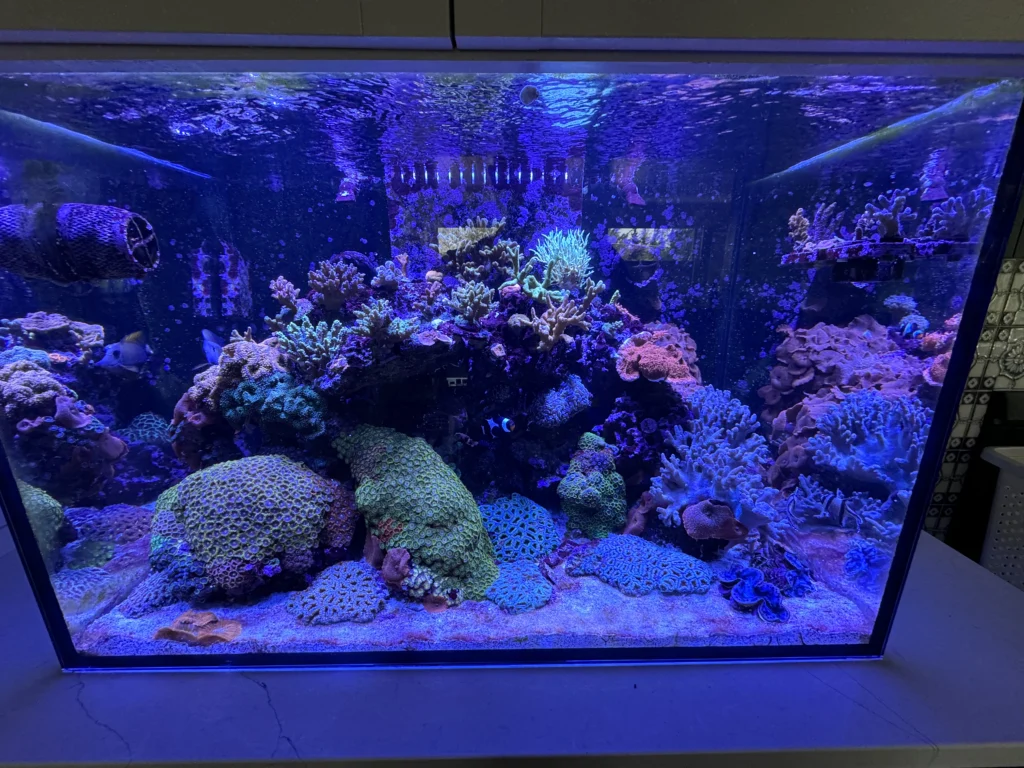
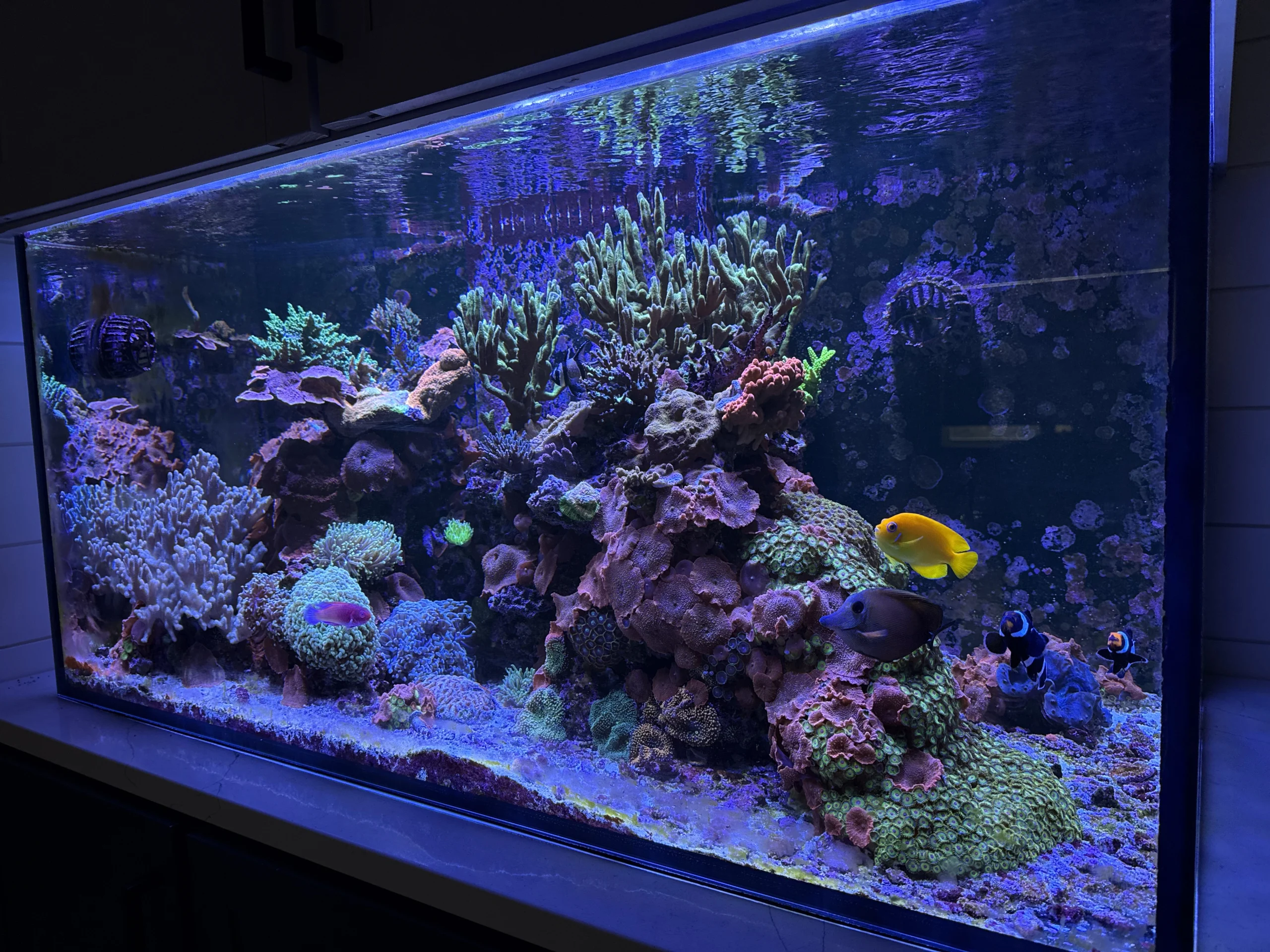
None of this is past tense. Brett’s home reef is a 240-gallon mixed reef stocked entirely with aquacultured coral, with captive-bred fish wherever they’re available. It leans into flowing corals like torches, hammers, and Goniopora, because his wife loves the movement, alongside a serious SPS collection, because he likes his sticks.

The system runs on a Neptune Apex, with a Trident testing alkalinity, calcium, and magnesium every day, ICP testing every month, and a loose version of the Triton Method. A connected frag system holds whatever grows out of room.

Brett's personal 240-gallon mixed reef
Brett’s personal 240-gallon mixed reef.
Coral in Brett's personal 240-gallon reef
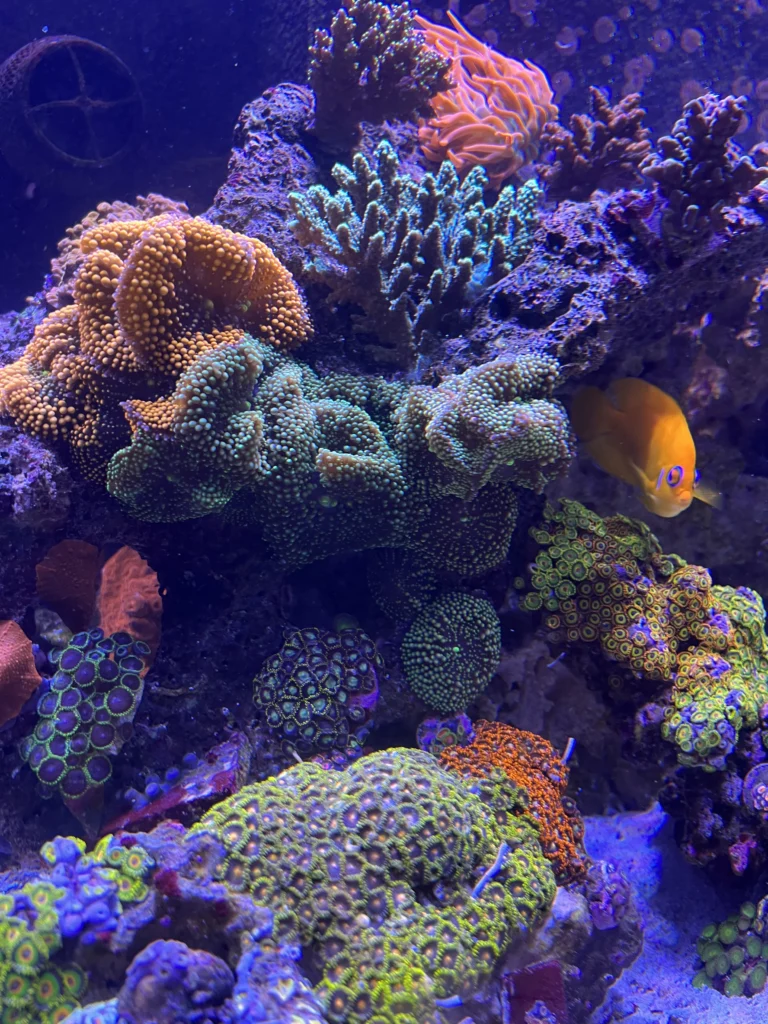
Details from Brett’s personal 240.
Coral in Brett's personal 240-gallon reef

His office has a 10-gallon nano reef: heavily automated, all aquacultured, with a mated pair of Yasha gobies, high-end zoanthids, and torches. It’s a fraction of the size of the 240, and it’s usually the reef friends end up staring at.

The controller and the daily tests watch the numbers. They don’t keep the reef alive. Technology monitors the reef. Biology runs it. That’s the thinking OKC Reef brings to every system it cares for.

If we keep them, we’re responsible for them.

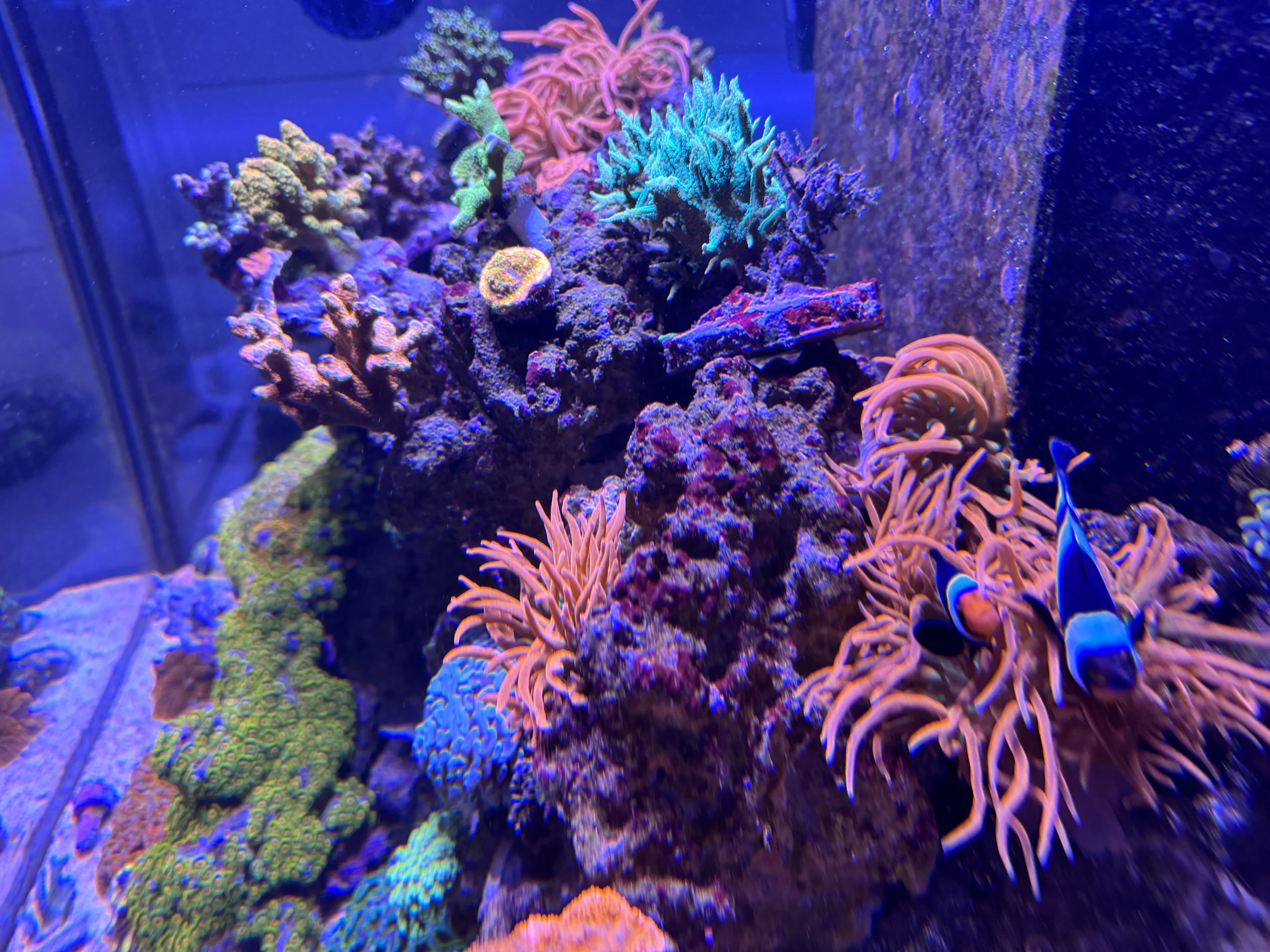
Aquacultured coral in Brett's personal reef
Aquacultured coral in Brett’s personal reef.

Having seen the collection side of the hobby up close, Brett believes aquaculture is the best path forward for reef aquariums, rather than relying on taking more coral and fish from wild reefs.

That isn’t a judgment of anyone’s tank. Plenty of good reefs include wild-collected animals. The point is responsibility: if we choose to keep these animals, we owe them excellent care. That means protecting the ones already in our care, supporting aquaculture where we can, and never treating livestock as disposable.

It’s why we take maintenance seriously, why we focus on stability, why Reef Recovery exists, and why we’ll take in animals from a reef that’s coming to an end.

How we work

Learn the reef before changing it.

Every system has a history. We find out what it is before we touch anything.

Fix causes, not symptoms.

Algae on the glass is information. The problem is usually somewhere else.

Consistency beats heroics.

We show up on a schedule, not just when something breaks. Consistency is what keeps a reef stable, so it’s how we’re built.

Write down what happened.

After every maintenance visit, you see what we tested, what we changed, and what we’re watching.

Tell the truth when something isn’t working.

Even when it isn’t what you hoped to hear.

The animals aren’t disposable.

Everything above exists to keep them healthy. And when a reef comes to an end, we care where they go.

Coral in Brett's personal 240-gallon reef
From Brett’s personal 240.

Why we take in reef animals

Reef Rehoming isn’t built to be a big part of our business. It’s stewardship applied to the end of a reef: a company that works with reef animals every day should care what happens to them when a reef comes to an end.

Too many fish get flushed, and too much coral ends up in the trash, simply because the owner didn’t know anyone would take it. We’d like to be the call people make instead.

Don’t flush it. Don’t toss it. Call us.

About reef rehoming

An Oklahoma City company

OKC Reef is based in Oklahoma City and works with homes and businesses across the metro.

See our service area

See what specialization looks like on your reef.

Planning a new reef?

Request a design consultation