
Backup Power for Reef Aquariums
Backup power for a reef aquarium is not one decision. It is several, and they solve different problems at different price points. Getting this right means matching the solution to the outage you are actually likely to face, not buying the most impressive option available and assuming it covers everything.
Last verified
Start with the outage you are actually planning for
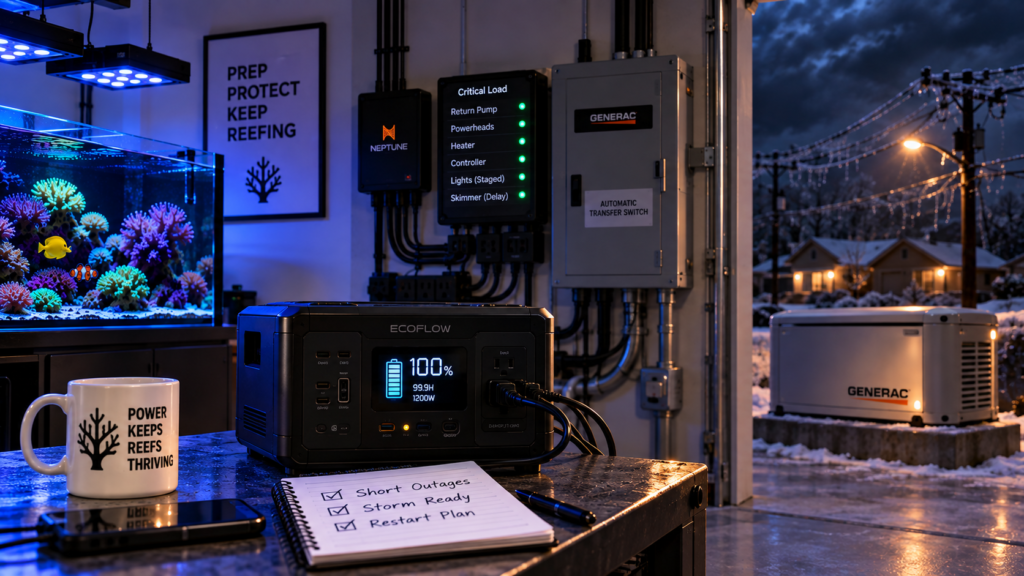
Oklahoma City’s realistic worst case outage runs into days, not hours, particularly during a winter ice event. Reef aquariums and Oklahoma City power outages covers why that is the case in detail. That single fact should drive most of the backup power planning that follows, since a solution built around a two hour outage and a solution built around a two week outage look almost nothing alike.

Battery backup: the short outage solution
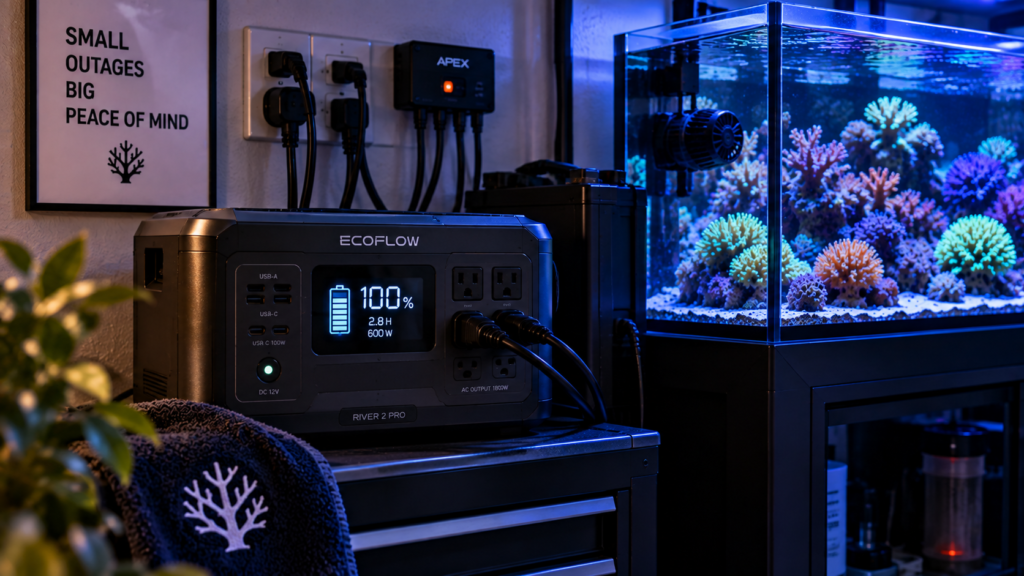
A battery backup, whether a dedicated aquarium battery system or a general purpose home battery unit, is excellent at covering the frequent, brief interruptions that happen far more often than a major storm: a momentary utility switch, a tripped breaker elsewhere on the grid, a short thunderstorm related blip. Most of these resolve within minutes to a couple of hours.
Sizing a battery system around a return pump, a powerhead or two for circulation, and possibly a heater covers the outages that matter most by sheer frequency, even though it will not carry a system through a multi day event. That is not a flaw in the battery. It is simply not the tool for that job.
Generators: the multi day solution
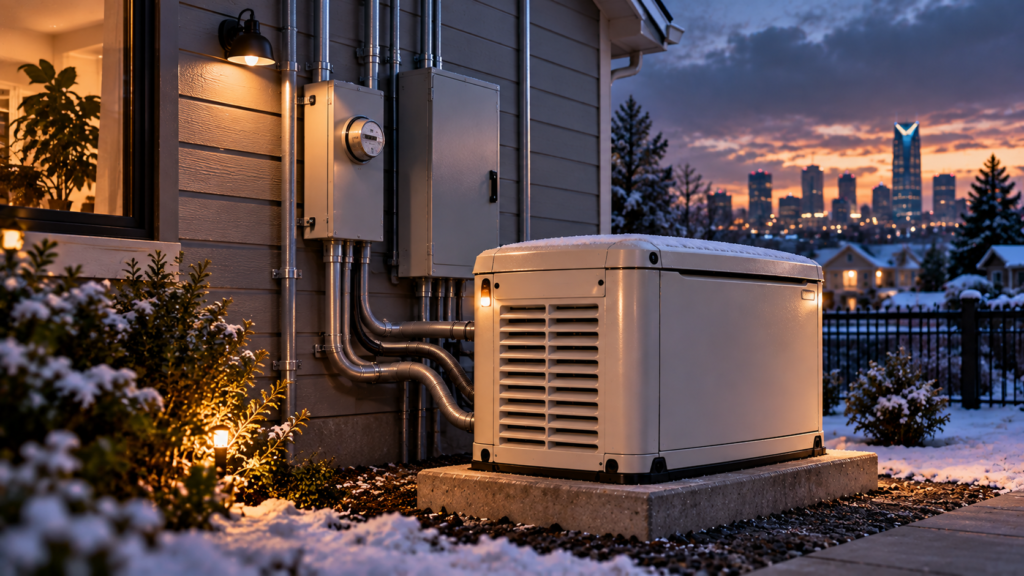
A generator, whether a portable unit brought out and connected manually or a standby unit that starts automatically and ties into the house’s electrical panel, is what actually answers Oklahoma City’s real worst case scenario.
A portable generator is less expensive and does not require a permanent installation, but it requires you to be present to set it up, fuel it, and manage it, which is a real limitation if an outage happens while you are away or overnight. A standby generator, permanently installed and connected through an automatic transfer switch, starts on its own within seconds of an outage and requires no manual intervention, which matters considerably during an overnight ice storm outage.
Fuel supply is also worth thinking through directly rather than assuming it will simply be available when needed. A portable generator running on gasoline depends on a stored supply that needs periodic rotation to stay usable, and a standby generator running on natural gas depends on the gas utility itself remaining operational, which is generally reliable but not guaranteed during the most severe winter weather events. Propane sits in between, offering a large stored supply without gasoline’s shelf life concerns, and is a common choice for standby units in this market for exactly that reason.
Sizing a generator for a reef system specifically is usually a small addition on top of whatever the rest of the house needs, since most reef equipment draws relatively little power compared to a home’s air conditioning or electric water heater. The more important question is usually not whether the generator can power the tank, but whether the tank’s circuit is actually wired to the panel circuits the generator or transfer switch covers.
This last point deserves emphasis, since it is the detail most likely to be overlooked. A whole home generator that covers every circuit in the house solves this automatically, but a smaller standby unit or a portable generator connected through a limited transfer switch may only power a handful of designated circuits, and there is no guarantee the aquarium’s circuit is one of them unless it was specifically planned for. Confirming this directly, ideally at the time the generator or transfer switch is installed, avoids discovering the gap during the outage itself.
The detail almost everyone misses: restart behavior
A generator or a returning utility connection does not solve the whole problem by itself. The moment power resumes, whether from a generator starting or the utility restoring service, every piece of equipment in the system tries to restart simultaneously. A return pump slams back on. A skimmer that has settled during the outage often overflows the instant it restarts. Heaters, dosers, and reactors all fire at once, frequently on a circuit that is also restarting the house’s air conditioner and other major appliances.
Restart sequencing covers how to stage equipment back on deliberately, in an order that avoids the skimmer overflow and the electrical surge of everything restarting together. This matters considerably more in a market where restarts, whether from brief blinks or extended outages, are a routine occurrence rather than a rare event.
Putting together a plan that actually fits your system
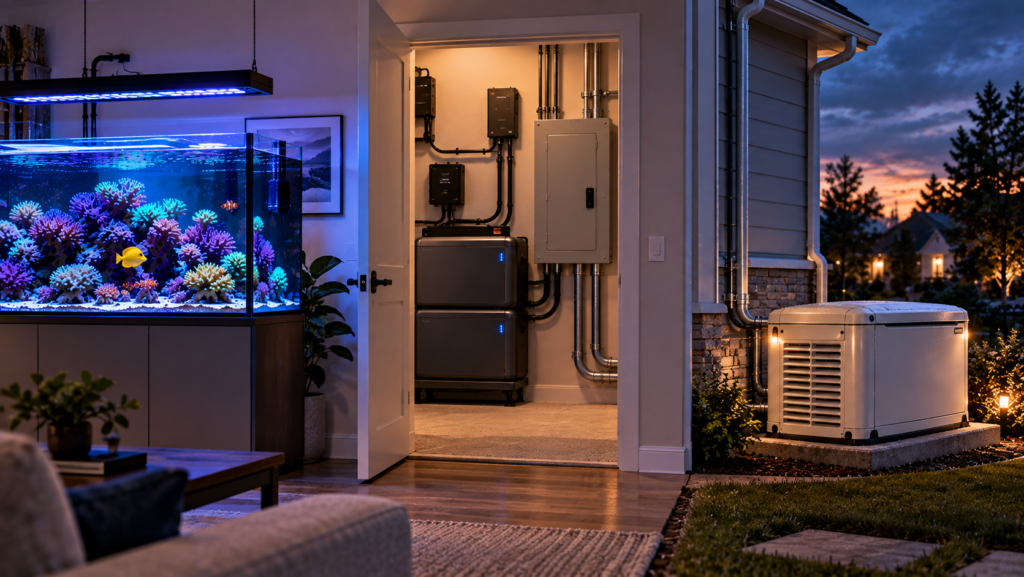
A reasonable approach layers these tools rather than choosing one. Battery backup for circulation and air, sized to bridge the frequent short outages. A generator plan, whether portable or standby, sized to answer the realistic multi day scenario. And a restart sequence configured on the controller so that whichever backup solution kicks in, the system comes back online in the right order rather than all at once.
Working out exactly what that looks like for a specific system, room, and electrical setup is core design and installation work, and it is also something an existing system can retrofit without a full rebuild.
Sources
- OG&E OG&E completes power restoration following historic October ice storm, accessed September 2026