Reef Aquarium Equipment: How It Works and How It Fails
A reef tank is really a small, closed ecosystem being kept alive by a collection of mechanical and electronic equipment working together continuously. Understanding what each piece actually does, and how it tends to fail, makes it much easier to diagnose a problem quickly instead of guessing.
Last verified
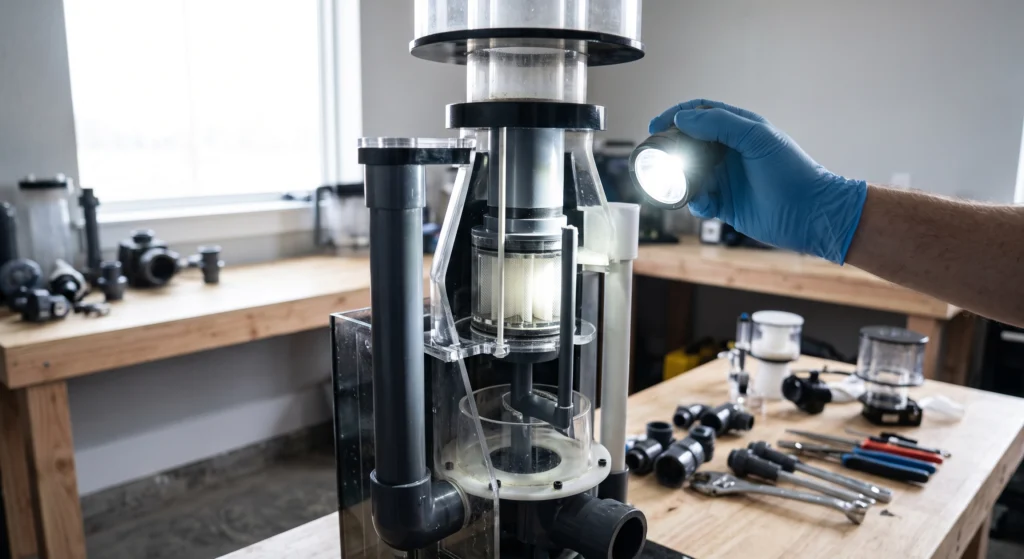
This page is an overview of the major equipment categories, with links to a deeper guide on each.
Circulation: return pumps and powerheads
Water movement is not optional in a reef tank. A return pump moves water from the sump back to the display, and powerheads create additional flow directly in the display for coral health and detritus suspension. Both are mechanical devices with a finite lifespan, and both are common points of failure during or after a power event.
Flow does more than just look good moving across a reefscape. Corals depend on water movement to deliver food and oxygen and to carry away waste at the tissue level, and different coral types have genuinely different flow preferences, which is part of why flow planning is treated as its own design consideration rather than an afterthought once everything else is in place. Reef return pumps: sizing, head loss, and failure modes covers the specifics.
Filtration: protein skimmers and media
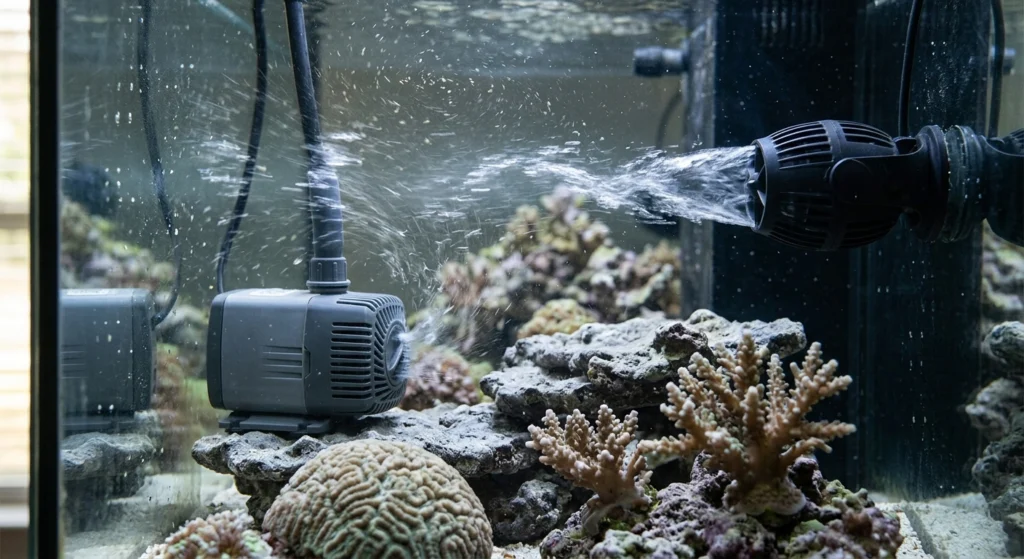
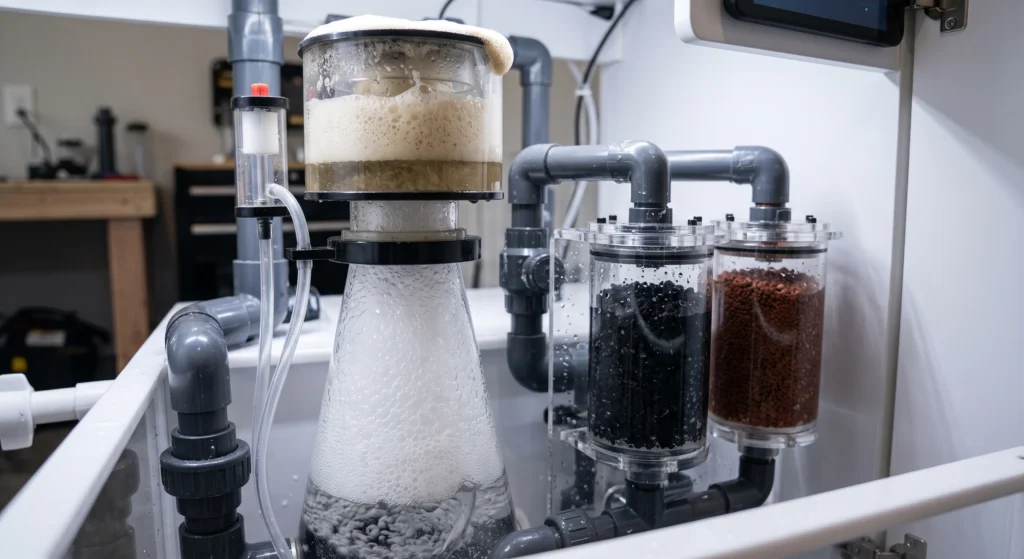
A protein skimmer removes dissolved organic waste before it breaks down into compounds that harm water quality, and it does this by pulling large volumes of air through the water column, a detail that matters for reasons beyond filtration alone. Protein skimmers: sizing, tuning, and troubleshooting covers how to know if a skimmer is actually performing correctly. Carbon and other media reactors handle additional filtration tasks a skimmer does not, covered in carbon, GFO, and media reactors.
Temperature control: heaters and chillers
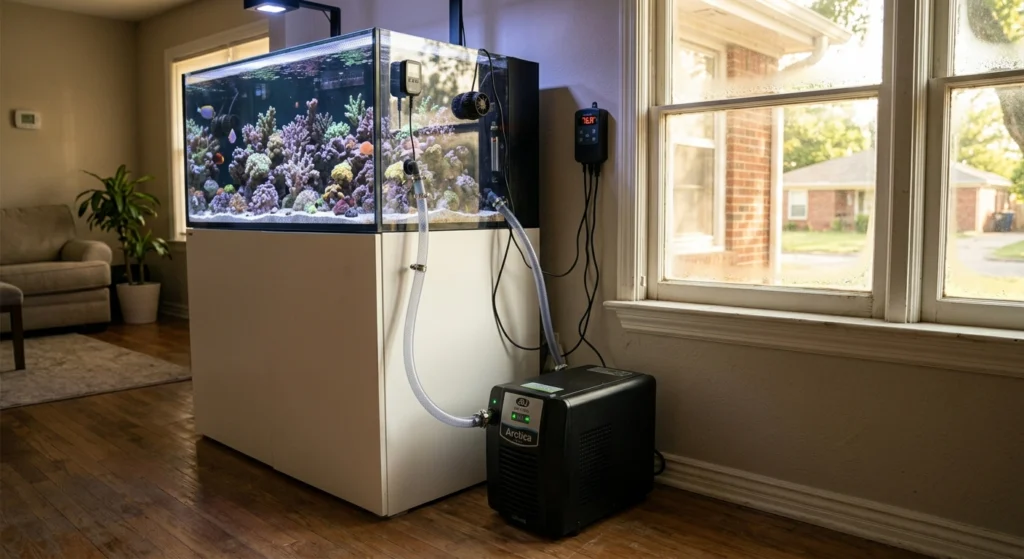
Reef livestock tolerates a range of temperatures but does not tolerate instability well. Heaters and chillers work in opposite directions toward the same goal, a stable target temperature, and both fail in ways that are not always obvious immediately. Reef heaters: sizing, redundancy, and failure and reef chillers, when you need one and when you don’t cover each in detail.
Water replenishment: auto top off systems
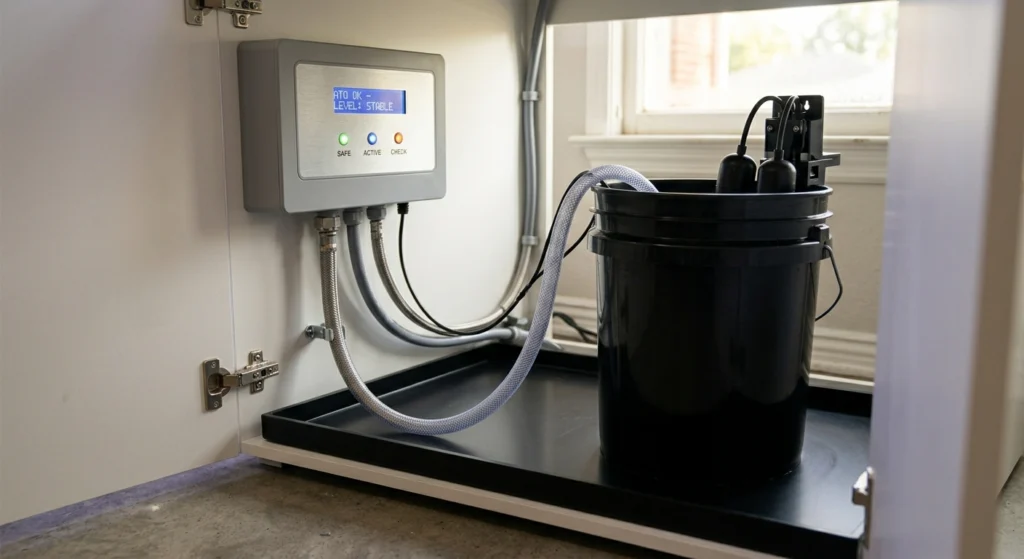
Evaporation happens continuously, and an auto top off system replaces that lost water automatically to keep salinity stable without manual intervention every day. These systems are simple in concept but have a specific failure mode, a stuck float switch, that can cause real problems in either direction. Auto top off systems: design, safety, and failure modes covers this directly.
Water production: RO/DI systems
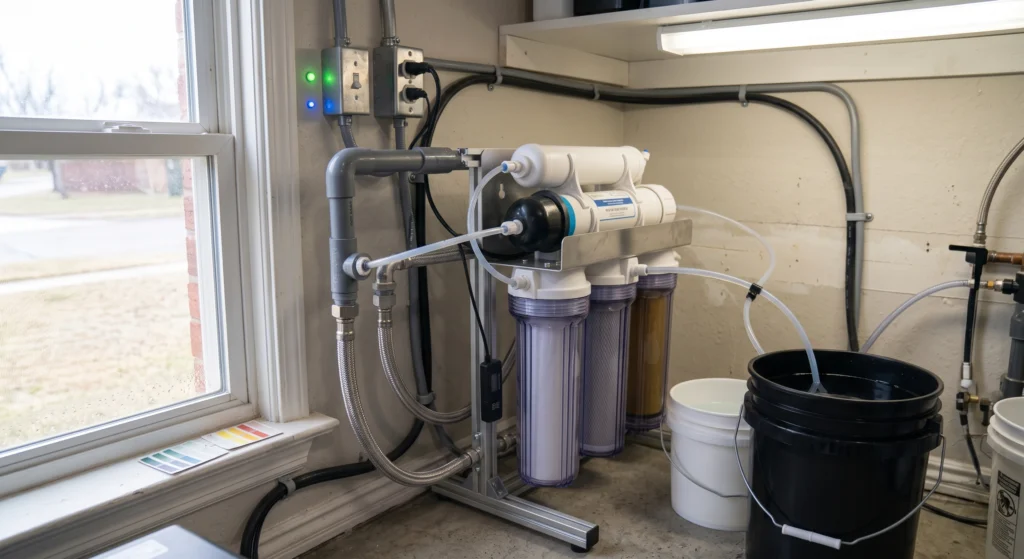
Nearly every reef tank runs on water that started as tap water and was processed through a reverse osmosis and deionization system to remove dissolved minerals and disinfectant byproducts before it ever reaches the tank. RO/DI systems: stages, membrane life, and troubleshooting covers how these systems work and what affects their performance, and running an RO/DI system in Oklahoma City covers the local considerations specific to this market’s water.
Automation and monitoring: controllers and dosing pumps
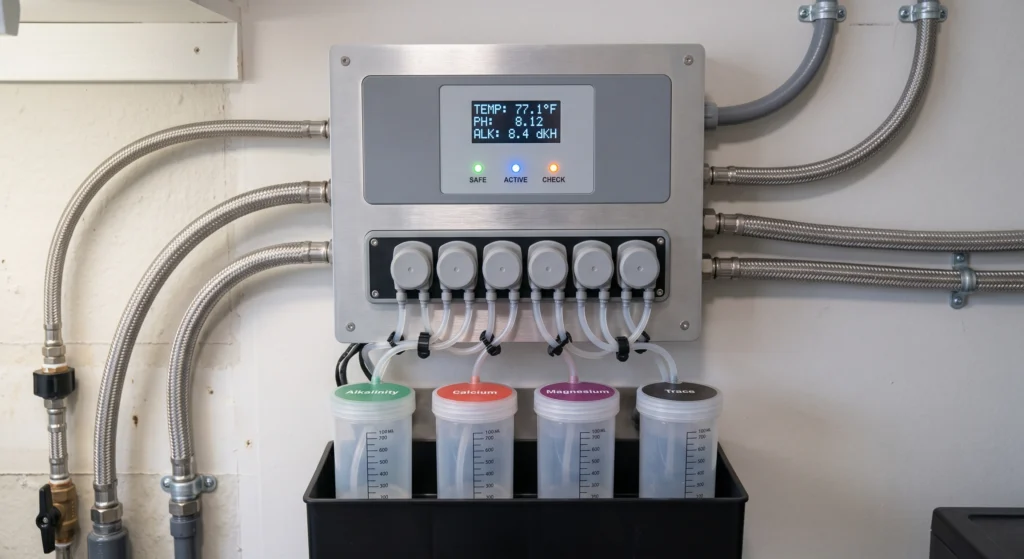
A reef controller monitors conditions and can automate responses, and a dosing pump delivers precise, scheduled additions of supplements without manual dosing every day. Together they represent the layer of automation that catches problems faster than a human checking the tank once a day ever could.
The value of this layer is easiest to see in what it prevents rather than what it actively does day to day. A controller that catches a temperature swing at two in the morning, or a doser that maintains consistent alkalinity through a busy week when manual dosing would have been forgotten, is doing its most important work quietly, in the moments nobody would otherwise be watching. Reef controllers: what they actually protect you from and dosing pumps: calibration, redundancy, and safe failure cover both.
Lighting and the sump itself
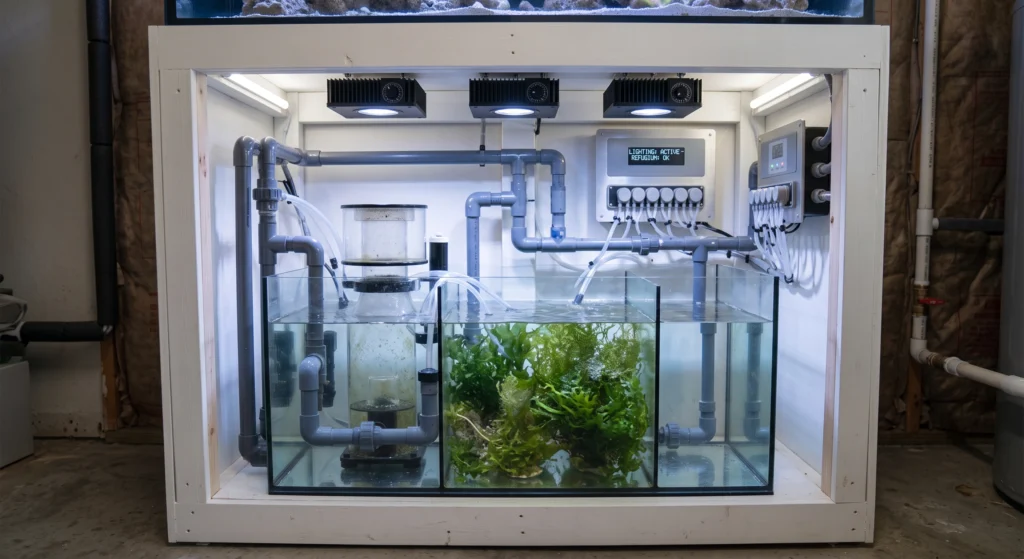
Reef lighting drives coral growth and color and represents one of the larger ongoing electricity loads in the system, covered in reef lighting: spectrum, intensity, and photoperiod. The sump itself, the equipment housing behind the scenes, deserves its own consideration for volume and safety margin, covered in sumps and refugiums: volume, sections, and safety margin.
Why equipment knowledge matters even if you never touch a wrench
You do not need to personally service every piece of equipment in your system to benefit from understanding roughly what each one does and how it tends to fail. That knowledge is what turns “something seems off” into a specific, useful observation, whether you are troubleshooting yourself or describing a problem to someone else.
Consistent equipment inspection, maintenance, and timely replacement before something fails outright is a core part of what ongoing reef maintenance covers.