
Reef Aquarium Water Chemistry: The Complete Guide
Reef water chemistry can look intimidating from the outside, with a long list of parameters, target ranges, and testing schedules. In practice, a handful of relationships explain most of what actually matters, and once those relationships make sense, the rest becomes a lot more manageable.
Last verified
This page is an overview. Each section below covers one parameter briefly and links to a deeper guide for anyone who wants the full picture on that specific one.
The core relationship: alkalinity, calcium, and magnesium
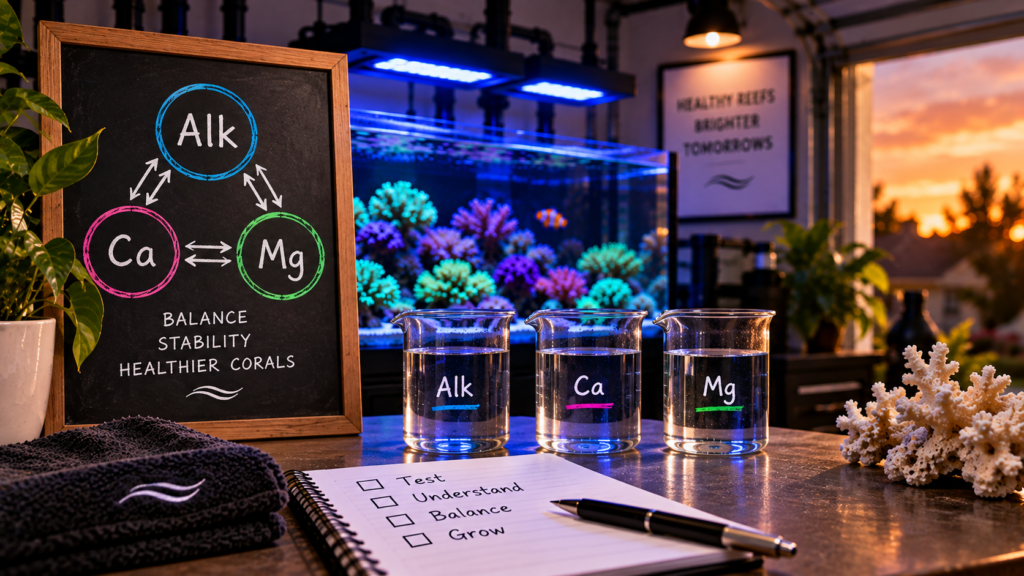
These three parameters are often discussed together because corals consume calcium and alkalinity together as they build their skeletons, and magnesium plays a supporting role in keeping calcium and alkalinity from precipitating out of solution at reef relevant concentrations.
Alkalinity: targets, stability, and control is usually the right place to start, since alkalinity stability tends to matter more day to day than hitting an exact number, and swings here are one of the more common sources of coral stress in an otherwise healthy tank.
The reason these three parameters get grouped together in almost every reefkeeping conversation is that they cannot really be understood in isolation. Dosing calcium without paying attention to alkalinity, or the reverse, tends to produce confusing results, since the two are consumed together and a shortage of either one limits how much of the other a coral can actually use. Magnesium is the quieter partner in this relationship, but a magnesium deficiency can make an otherwise correct alkalinity and calcium dosing routine behave unpredictably, which is why it is usually checked whenever the other two are not behaving as expected.
Nitrate and phosphate: not simply zero is best
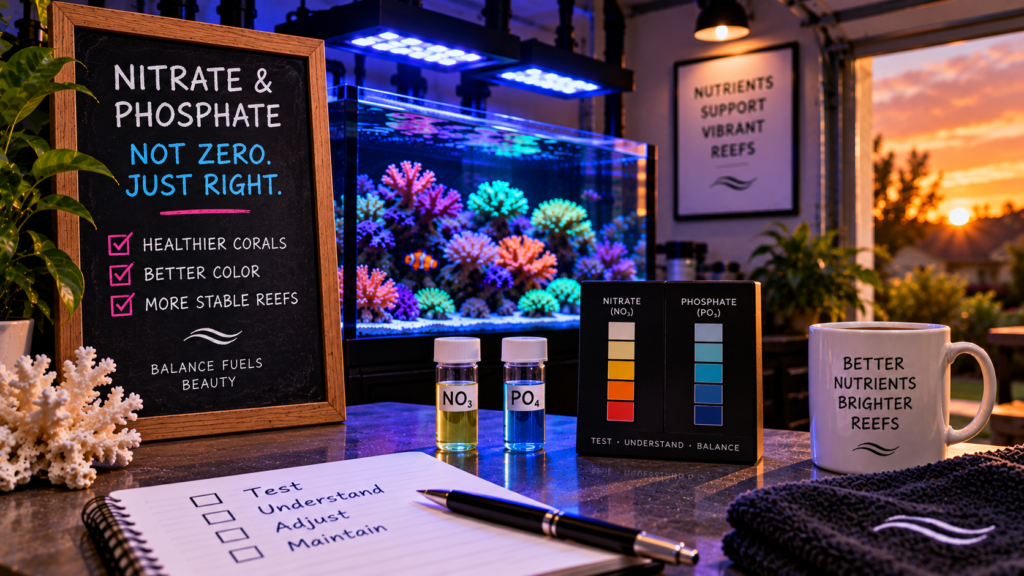
A common misconception among newer reefkeepers is that these two parameters should be driven as close to zero as possible. In practice, corals and other reef life generally do better with some measurable nitrate and phosphate present, since these are genuine nutrients rather than pure waste, and driving them too low can cause its own set of problems, including coral color loss and increased susceptibility to certain algae types, counterintuitively.
This misconception is understandable, since freshwater and general aquarium advice often does treat nitrate and phosphate as pure waste products to be eliminated, and a lot of that advice circulates in reef forums without the context that reef systems work differently. A small, stable, measurable amount of both is generally a sign of a healthy, balanced system, not a problem waiting to happen.
Reef nitrate: why zero is not the goal and reef phosphate: control without crashing the tank both cover this in more depth, including how to think about what range is actually appropriate for your specific system and livestock.
pH: more environmental than people expect
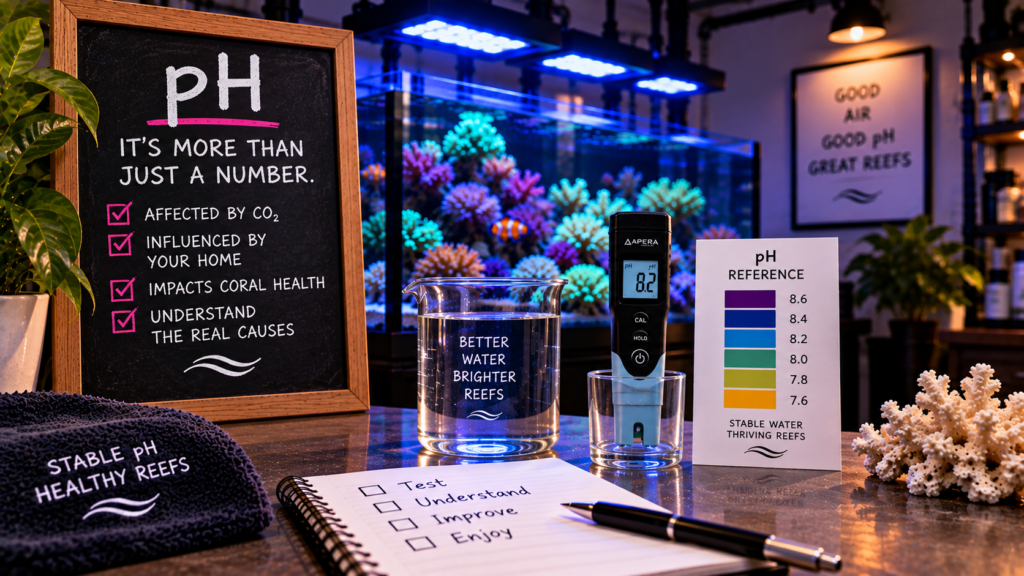
pH in a reef tank is influenced by dosing and biological activity, but it is also heavily influenced by factors outside the tank entirely, particularly dissolved CO2 exchange with the surrounding room air. A tank with fine alkalinity and calcium can still show a stubbornly low pH for reasons that have nothing to do with dosing.
Reef pH: causes of low pH and what actually fixes it covers the range of causes, and why reef pH runs low in Oklahoma City homes covers a specific, genuinely common local version of this that is worth knowing about if you keep a tank in this climate.
Salinity and temperature: the two most consequential basics
These two are simple to understand conceptually and easy to get wrong in practice. Salinity is affected by evaporation and by how accurately a refractometer or hydrometer is calibrated, and temperature affects nearly every other biological and chemical process happening in the tank. Both deserve consistent monitoring rather than a set once and forget approach. Reef salinity: measurement, drift, and stability and reef temperature: targets, stability, and rate of change both cover the practical side of managing each one.
Testing: knowing what your numbers actually mean
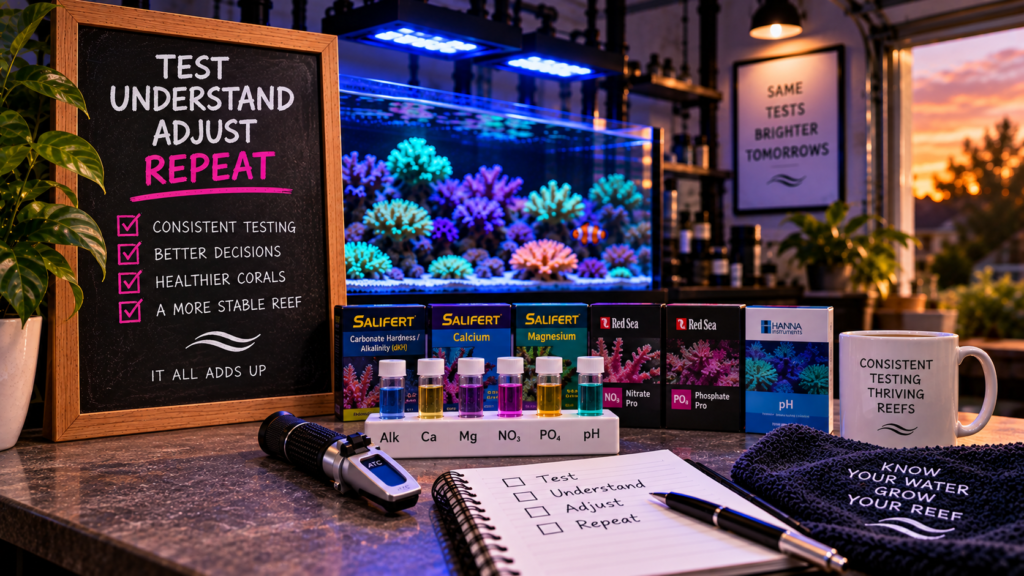
None of the above matters if testing is inconsistent or the results are not being interpreted correctly. Reef test kits: accuracy, frequency, and what to trust covers how to build a testing routine that actually tells you something useful, rather than generating numbers without a clear sense of what to do with them.
Why this varies by system, and why that is fine
The correct target for several of these parameters depends on what is actually in your tank, a system dominated by fast growing small polyp stony coral generally runs somewhat different demand than a system built around large polyp stony coral and fish, your feeding routine, and how the system has behaved historically. A stable system running slightly outside a textbook range is often in better shape than an unstable one chasing a perfect number, and one of the more useful skills in reefkeeping is learning to tell the difference between a number that is actually a problem and a number that is simply different from what a forum post said it should be.
If you would rather have someone else own this routine, consistent testing, dosing, and adjustment based on how your specific system behaves is the core of what ongoing reef maintenance actually covers.