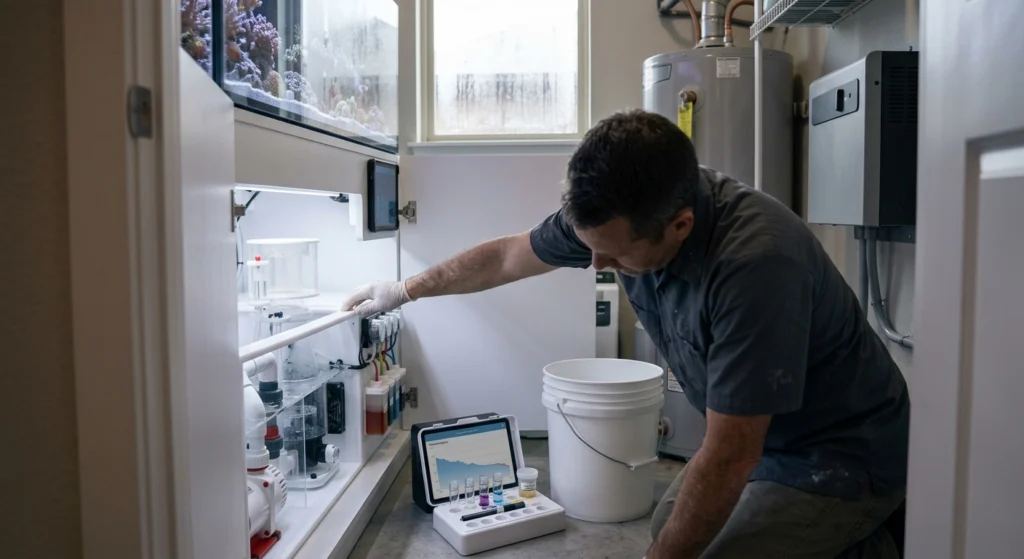
Reef Recovery After a Power Outage
Power coming back on is not the end of an outage's effect on a reef tank. It is the start of a second phase that deserves its own attention, particularly after a longer outage of the kind Oklahoma City winters occasionally produce.
Last verified
Do not assume everything restarted correctly
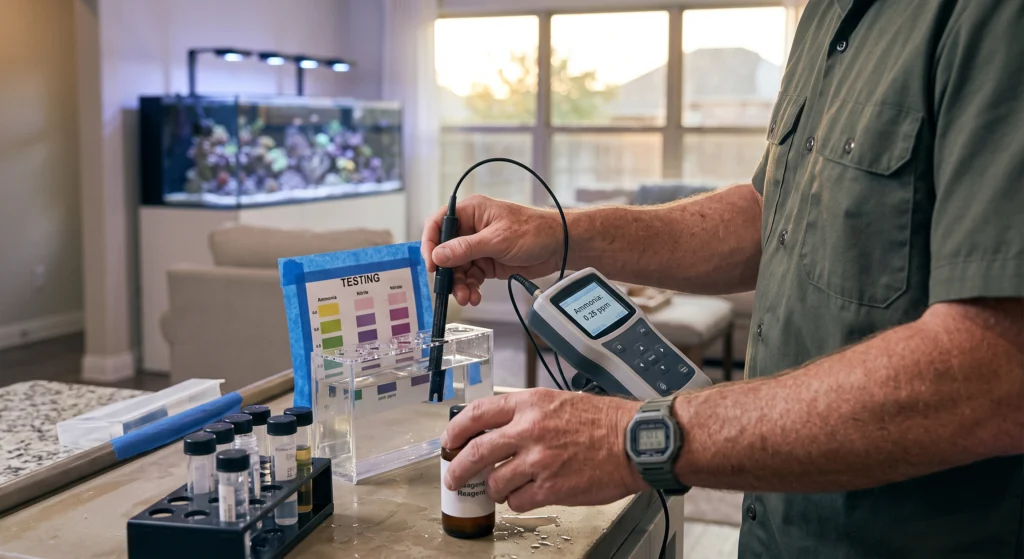
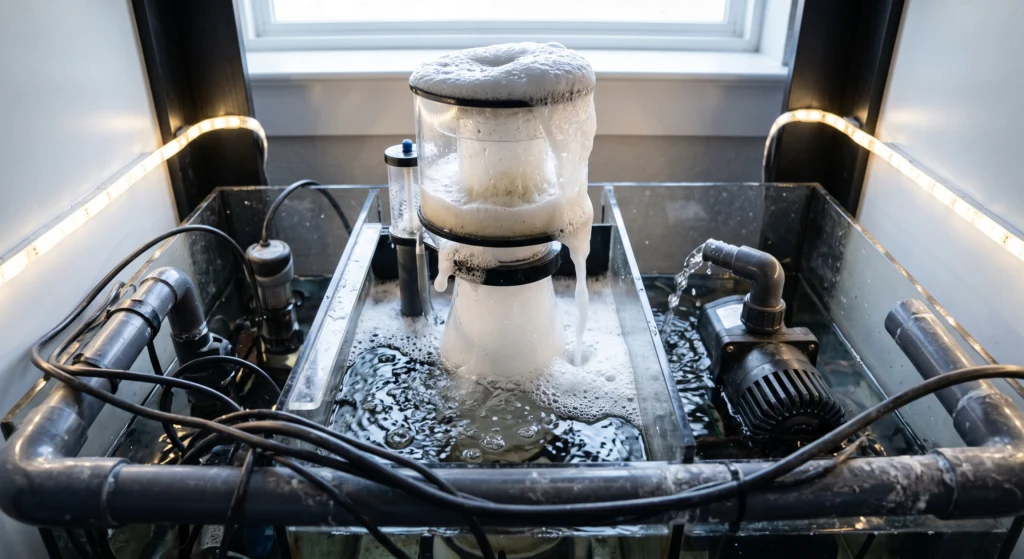
The moment power returns, every piece of equipment in the system tries to restart at once, and not everything necessarily comes back the way it was before. Check that the return pump is actually running and priming correctly, not just powered on. Check the skimmer specifically, since a skimmer that settled during the outage commonly overflows on restart, and that overflow can go unnoticed for a while if nobody is watching closely. Confirm heaters and any chiller are both functioning and set correctly, since a controller losing power can sometimes reset settings depending on the specific hardware.
Restart sequencing covers how to avoid this problem going forward by staging equipment back on deliberately rather than all at once, which is worth setting up if this was not already in place.
Assess where things actually stand
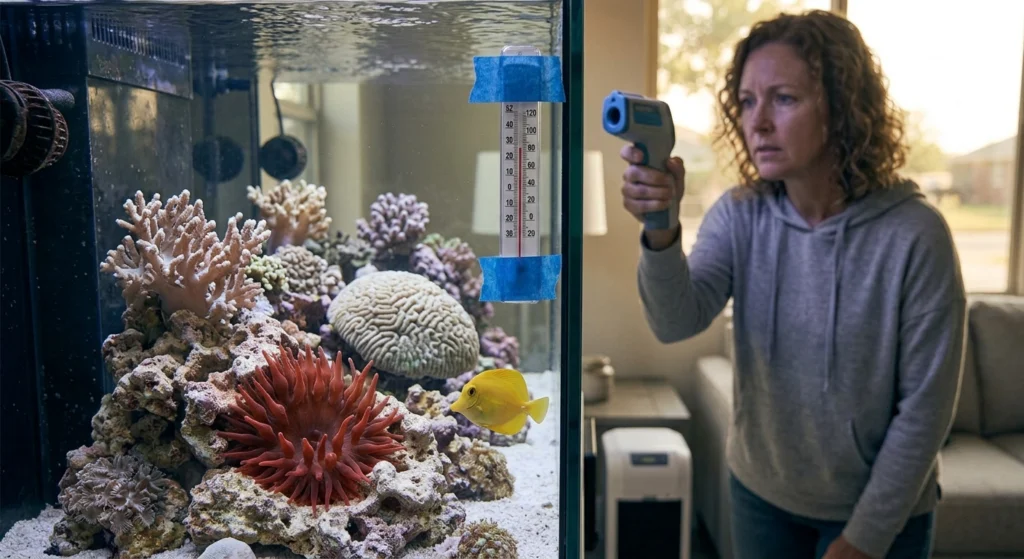
Once equipment is confirmed running correctly, the next step is understanding how much the tank actually drifted during the outage. Check current temperature against the tank’s normal range, and think through what season it was and how long the outage ran, since that combination determines whether the bigger risk during the outage itself was likely temperature or oxygen. Test water parameters, since an extended period without circulation or filtration can allow ammonia or other parameters to shift, particularly in a heavily stocked system.
Look at livestock condition directly rather than assuming everything is fine because the tank looks normal at a glance. Corals that were under stress during the outage may show delayed effects over the following day or two rather than an immediate obvious reaction. Fish and invertebrates should be checked for normal behavior and feeding response once conditions have stabilized.
It is worth evaluating fish, corals, and invertebrates separately rather than scanning the tank as a whole and assuming everything is fine if nothing looks obviously wrong. Each group can show different signs of stress, on different timelines, and the sensitivity of any given animal to a particular stressor genuinely depends on the species and the specific stress involved, not a fixed order in which groups are affected. Checking each category on its own terms, rather than relying on whichever one happens to be easiest to observe at a glance, gives a more honest picture of how the system actually came through the outage.
What to do if the tank drifted significantly
If temperature moved well outside the normal range during the outage, bring it back gradually rather than forcing a rapid correction, since a sudden swing back toward normal can itself be stressful on top of what livestock already experienced. The appropriate pace for that correction depends on the system, the livestock involved, how far temperature actually drifted, and how long the outage lasted, so this is a principle to apply with judgment rather than a fixed number to follow. A tank that spent two days slowly cooling during a winter outage does not need to be rushed back to normal in thirty minutes once heat is restored, and doing so risks trading one stressor for another.
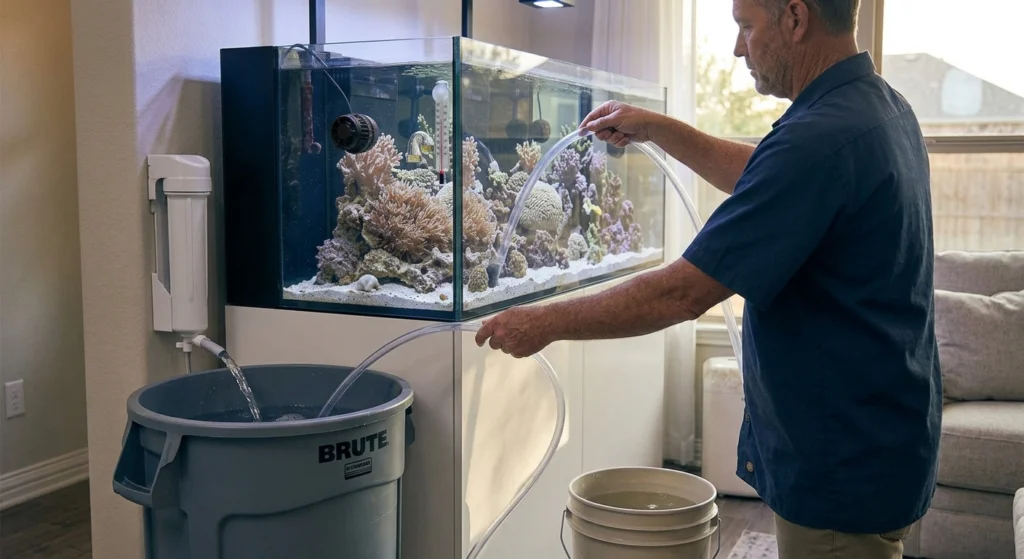
If water quality tested poorly, a partial water change is often a reasonable response, but it is worth testing first rather than changing water reflexively, since the specific parameter that shifted determines what kind of correction actually helps.
Watch for delayed effects over the following week
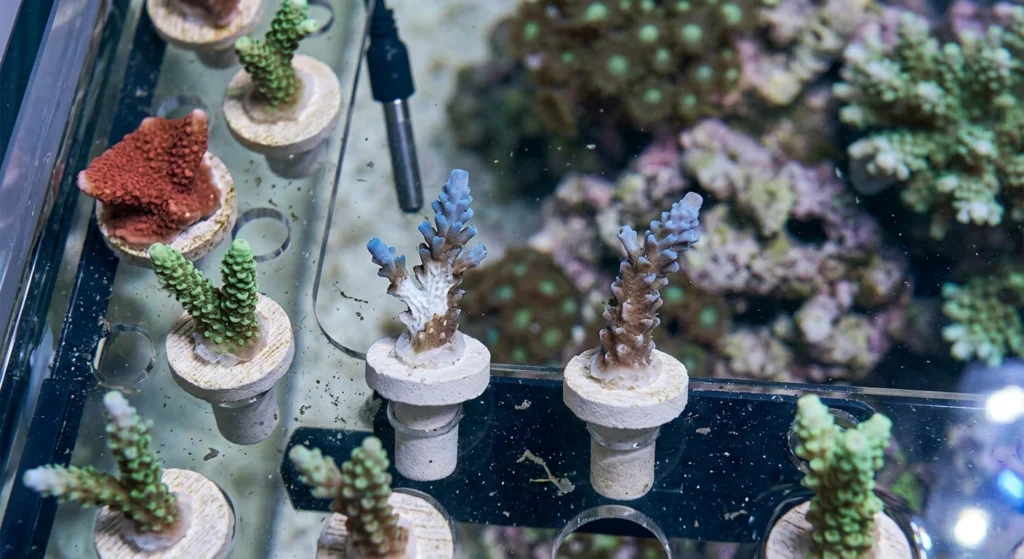
Some of the real impact of an extended outage does not show up immediately. Coral that looked fine the day power returned can show tissue stress or color loss over the following several days as the cumulative effect of the stress becomes visible. This is worth watching for specifically rather than assuming the tank is fully in the clear simply because nothing looked wrong on day one.
When to bring in help
A system that came through a brief outage without significant drift generally does not need anything beyond the checks above. A system that experienced a genuinely extended outage, that shows signs of real livestock stress, or where you are not confident everything actually restarted and stabilized correctly is a reasonable situation for a proper Reef Recovery visit, since catching a developing problem early matters considerably more than catching it after it has progressed.
If you have not yet reviewed your backup power and restart plan, doing so now, rather than waiting for the next outage, is worth the time. Reef aquariums and Oklahoma City power outages and backup power for reef aquariums both cover that planning directly.