
OG&E SmartHours and Your Reef Aquarium
If your electricity comes from OG&E and you are enrolled in SmartHours, there is a summer afternoon window where your electricity price changes, sometimes sharply. That has a real, if indirect, effect on a reef aquarium, and it is worth understanding before it causes a problem you did not expect.
Last verified
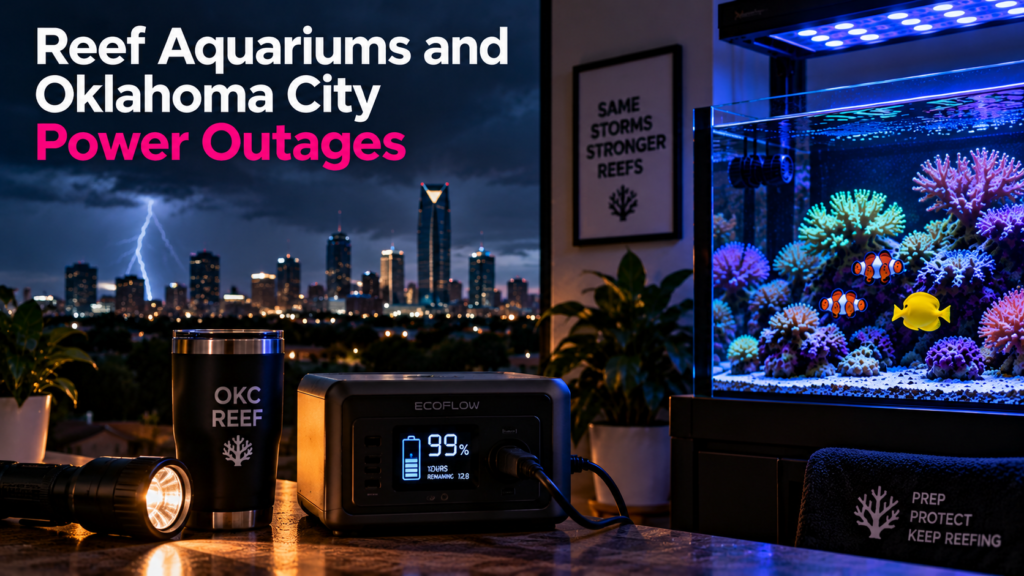
What SmartHours actually is
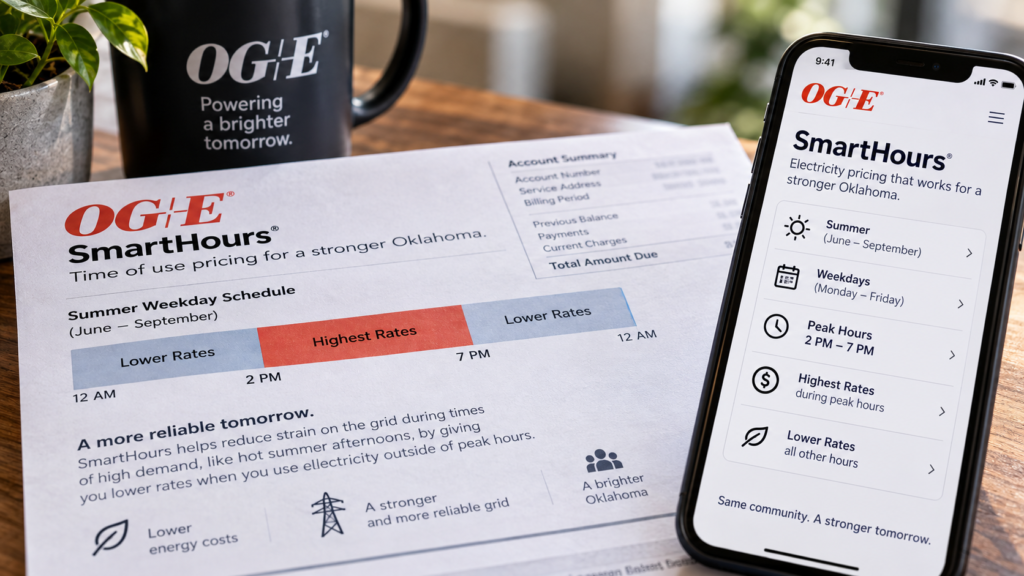
SmartHours is OG&E’s time of use pricing program. Instead of a flat rate all day, pricing shifts based on time of day and season, with the highest rates concentrated on summer weekday afternoons, roughly 2 to 7 PM, from June through September. OG&E also calls certain especially high demand afternoons “Critical” price days, which typically come with a notice a few hours ahead of time.
The program exists because that window, hot summer afternoons, is when the regional power grid is under the most strain. Pricing is one of the tools utilities use to encourage customers to shift usage away from that window voluntarily.
None of this is unique to reef aquariums. It applies to every appliance in the house. But a reef tank has one characteristic that most appliances do not: it depends heavily on the house’s air conditioning to hold a stable temperature, and it runs continuously with no ability to simply pause.
A refrigerator can tolerate a warm kitchen for an afternoon without consequence. A reef tank cannot shrug off a warm room the same way, since livestock health depends on staying within a fairly narrow band day after day, not just surviving a single rough afternoon. That difference is why a program built around ordinary household electricity use ends up mattering more to a reef aquarium owner than it does to most of their neighbors.
The part that actually affects a reef tank
The risk is not the electricity price itself. It is the behavior the price can encourage.
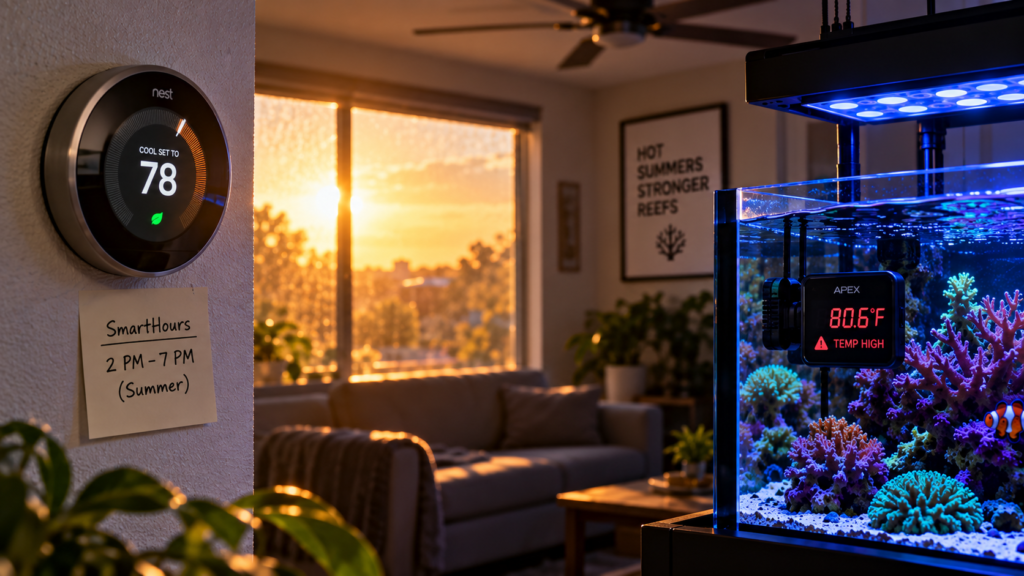
A SmartHours customer has a financial incentive to raise the thermostat during that 2 to 7 PM window on a hot day, precisely the hours when an Oklahoma City afternoon is hottest and a house’s air conditioning is working hardest to begin with. If a reef tank’s room runs warm on a normal afternoon, that same room on a thermostat setback during a Critical pricing event can run warmer still, right at the point in the day it can least afford to.
This is a genuinely easy thing to overlook, because the connection between an electricity bill decision and a fish tank’s temperature is not obvious until you have seen it happen.
Reef aquariums through an Oklahoma City summer covers the broader heat picture this program sits inside of.
What to actually do about it
You do not need to leave SmartHours or avoid it. The fix is smaller and more specific than that.
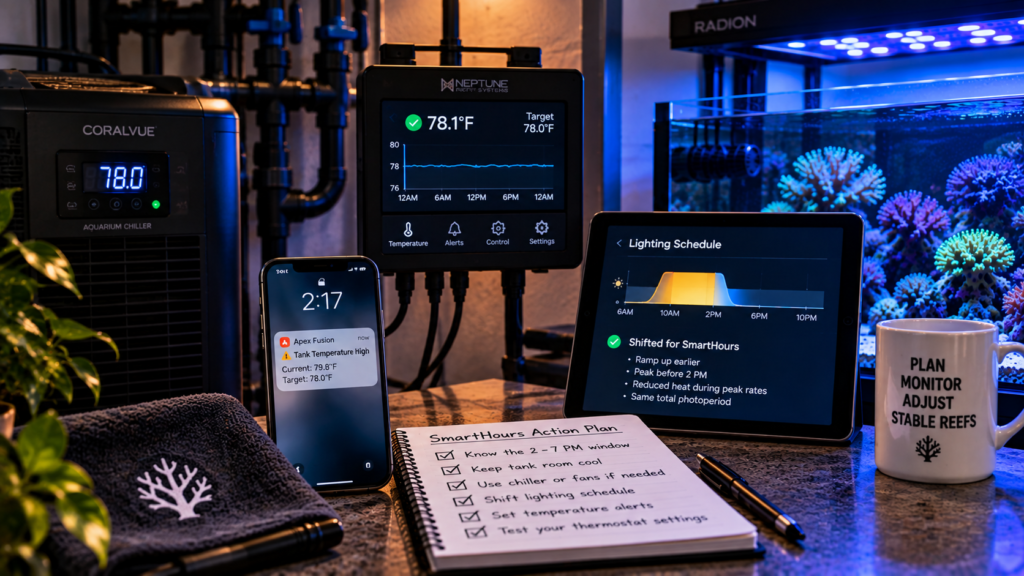
If you are enrolled, know when the summer peak window falls and treat your tank room like any other room that needs to stay within a certain range during it. That might mean setting a slightly more conservative thermostat floor for that specific window rather than letting the house drift warm along with everyone else’s, or it might mean relying more on a chiller or fans during those hours specifically rather than the house’s central air alone.
A tank running on a controller with a temperature alert is the simplest safeguard here. You do not need to personally track the SmartHours schedule every day if your controller will tell you the moment the tank itself drifts out of range, regardless of why.
It is also worth checking how your specific thermostat and HVAC system respond during a SmartHours event, since not every household setup behaves the same way. Some smart thermostats are configured to automatically adjust during utility pricing events as part of an opt in demand response program, separate from SmartHours pricing itself, and it is worth knowing whether your thermostat is enrolled in anything like that. A thermostat quietly following an automated demand response signal can shift the house’s cooling behavior without anyone in the household making an active decision that afternoon.
Photoperiod timing is a smaller, genuinely free optimization worth mentioning. Reef lighting is one of the larger, most controllable heat and electricity loads in a tank room. Shifting a lighting schedule so peak intensity does not fall inside the 2 to 7 PM window reduces both the electricity cost and the heat load in the room during exactly the hours the rest of the house is working hardest to stay cool.
The other side of this worth knowing
Oklahoma electricity rates, on average, run below the national average, which is a genuine advantage for anyone running electricity intensive reef equipment such as a chiller, a large return pump, or a big lighting array. SmartHours is part of how that lower average rate structure works, not a reason to avoid electricity intensive equipment altogether. The goal here is simply to be deliberate about one specific afternoon window during the hottest months, not to treat the whole program as a threat.
If your tank’s temperature has been drifting on hot afternoons and you are not sure whether the cause is your house’s cooling schedule, your equipment, or the room itself, temperature instability in reef systems walks through how to actually diagnose it.
Sources
- OG&E SmartHours, accessed September 2026
- U.S. Energy Information Administration Electric Power Monthly, accessed September 2026