
Chloramine and Your Reef Aquarium in Oklahoma City
Last verified
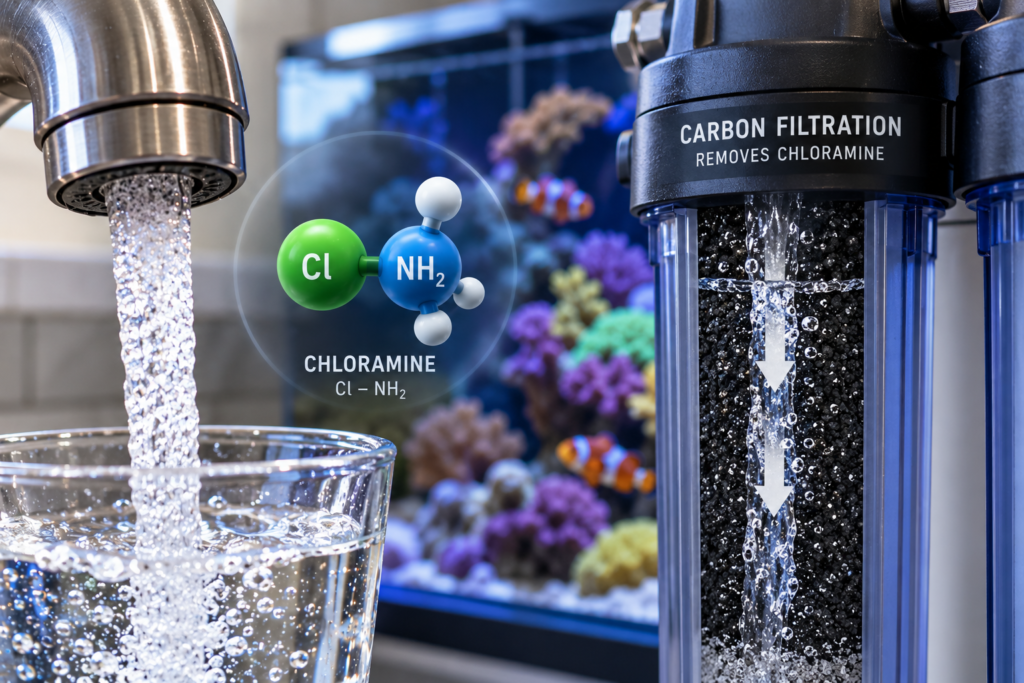
Yes, Oklahoma City disinfects its drinking water with chloramine, not plain chlorine. If you keep a reef aquarium here, that’s one of the more important local facts to understand, because chloramine behaves differently than chlorine in ways that matter for your equipment and your livestock.
Here’s what it is, why it’s used, and what it actually means for your tank.
What chloramine is
Chloramine is formed by combining chlorine with a small amount of ammonia. Water utilities across the country use it as a secondary disinfectant because, unlike chlorine, it doesn’t break down quickly, which lets it keep protecting water quality all the way through a large distribution system instead of fading out before it reaches the far edges of the service area. According to the EPA, more than one in five Americans is served by water treated with chloramine, and the practice has been used by utilities since the 1930s. It’s a normal, well-regulated part of municipal water treatment, and Oklahoma City’s use of it isn’t unusual nationally, it’s just something reefkeepers here need to plan around.
Why reefkeepers care
The EPA is direct about this: chloramine, like chlorine, must be removed before water is used in an aquarium, because the ammonia used to form it is toxic to fish and other aquatic life. That’s the core issue for a reef tank. Chloramine doesn’t just need to be neutralized, it needs to be removed thoroughly, because when it breaks down it releases ammonia directly into your water, and ammonia is one of the more dangerous things you can introduce to a closed marine system.
The detail that catches people off guard: chlorine dissipates on its own if you leave water sitting out or run it through the air, but chloramine does not. “Just let it sit overnight”, reliable advice for chlorinated water, doesn’t work here. You need active removal, every time.
What that means for RO/DI pretreatment
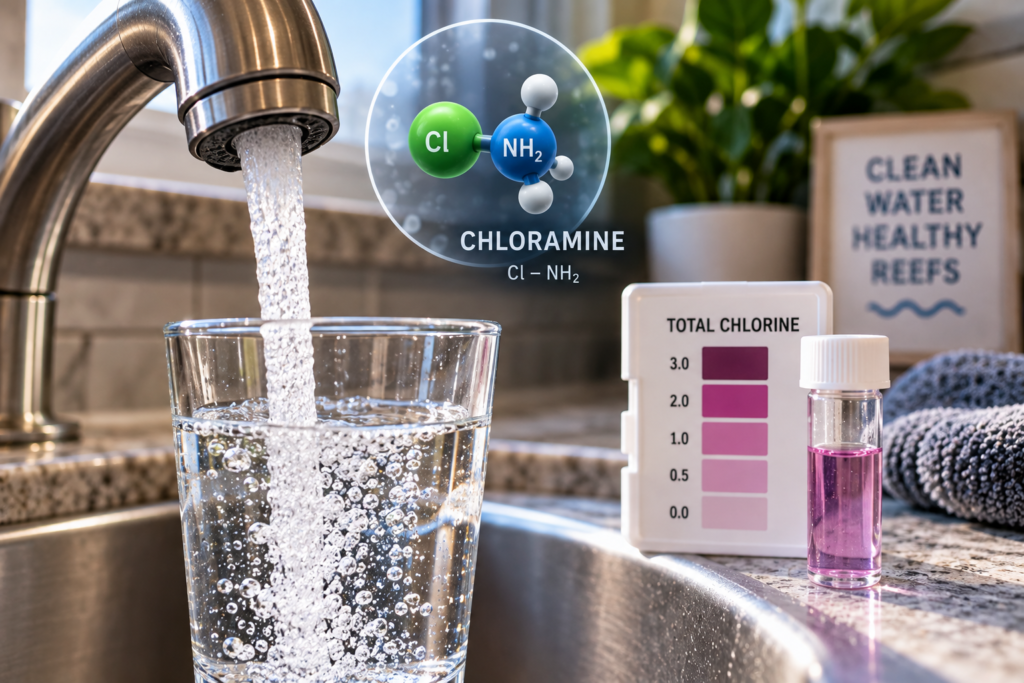
If you’re running an RO/DI system, chloramine changes what your carbon stage needs to do. Standard activated carbon removes chlorine well, but chloramine takes longer contact time and more capacity to break down effectively. This is why catalytic carbon, a version of activated carbon specifically suited to chloramine, is worth using ahead of your membrane rather than relying on standard carbon alone. It’s also why undersized or old carbon stages are a common, quiet failure point: the carbon can look and feel fine while it’s already stopped keeping up with the chloramine load coming through.
There’s a second issue worth knowing: your RO membrane isn’t a reliable backstop here. Chloramine that gets past your carbon stage can actually damage a thin-film composite membrane over time, and it isn’t fully rejected by the membrane even when the membrane is healthy. In other words, carbon isn’t just the first line of defense against chloramine, for practical purposes, it’s close to the only one.
How to think about servicing an RO/DI system here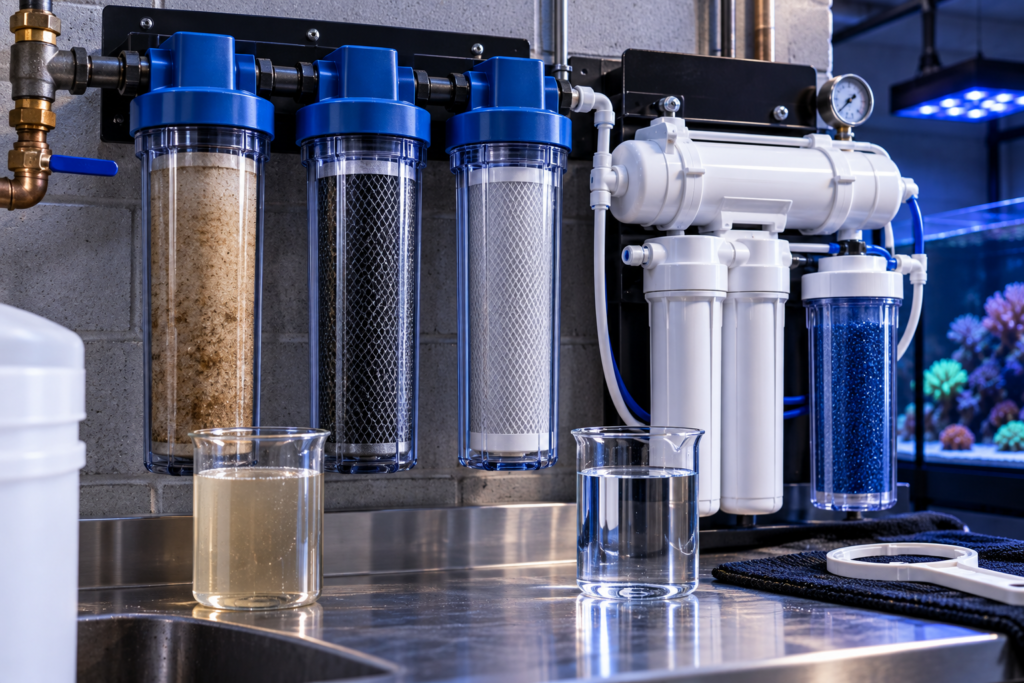
The 0 TDS trap
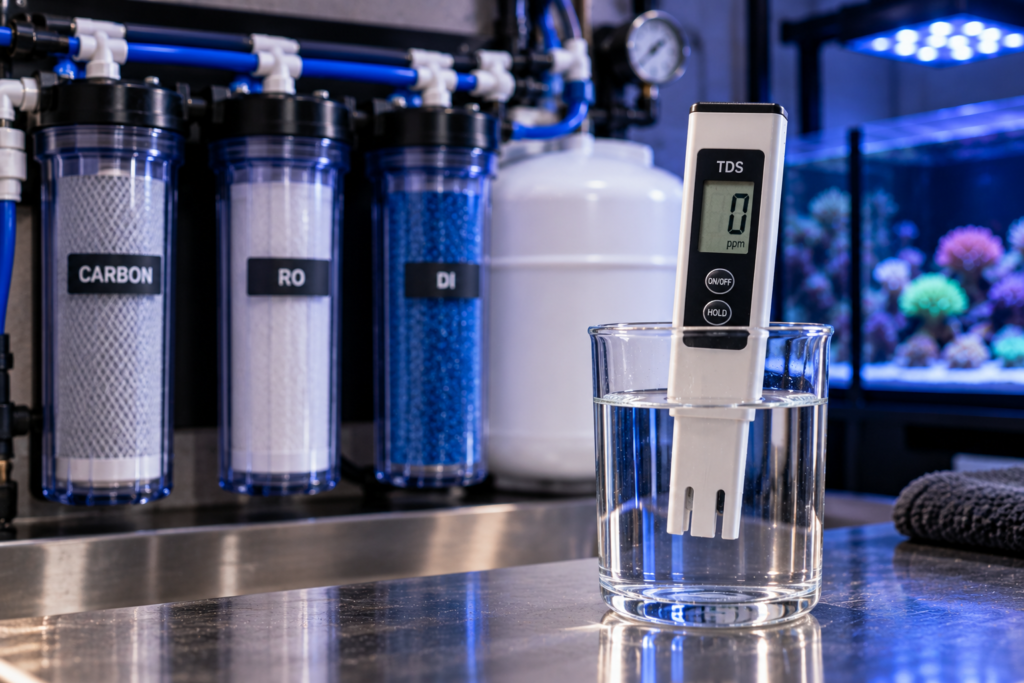
This is the single most useful thing on this page. A TDS meter measures dissolved, charged particles in water, it’s a good general check on your RO/DI’s overall performance. But it isn’t built to detect ammonia or chloramine breakdown products at the concentrations that matter to a reef tank. A meter reading of 0 tells you your membrane and DI resin are handling minerals well. It tells you nothing, by itself, about whether chloramine broke through your carbon stage.
We’ve seen this cause real confusion: a reefkeeper gets a clean 0 TDS reading, assumes the water is fine, and doesn’t realize the carbon exhausted before the DI resin did. TDS and chloramine breakthrough are two separate things your system has to handle, and only one of them shows up on a standard meter.
The practical takeaway: don’t treat a good TDS number as proof that chloramine isn’t getting through. If your carbon is old, if your flow rate through it is faster than it’s rated for, or if it’s simply been in service longer than it should have been, chloramine can pass even while your TDS reading looks perfect.
How to think about this in practice
You don’t need a chemistry degree to manage this well. You need a system built with adequate carbon contact time for Oklahoma City’s chloramine levels, and a habit of replacing that carbon on a schedule that reflects how much water you’re actually running through it, not just how the TDS meter looks. Exactly how often that is depends on your specific setup: your carbon volume, your flow rate, how much water you make, and your feedwater’s actual chloramine level, which is a detail we cover in more depth on our RO/DI page.
Running an RO/DI system in Oklahoma CityIf you’re curious how Oklahoma City’s chloramine levels compare to nearby cities in the metro, some run noticeably, that’s covered separately as well.
How water differs across the Oklahoma City metro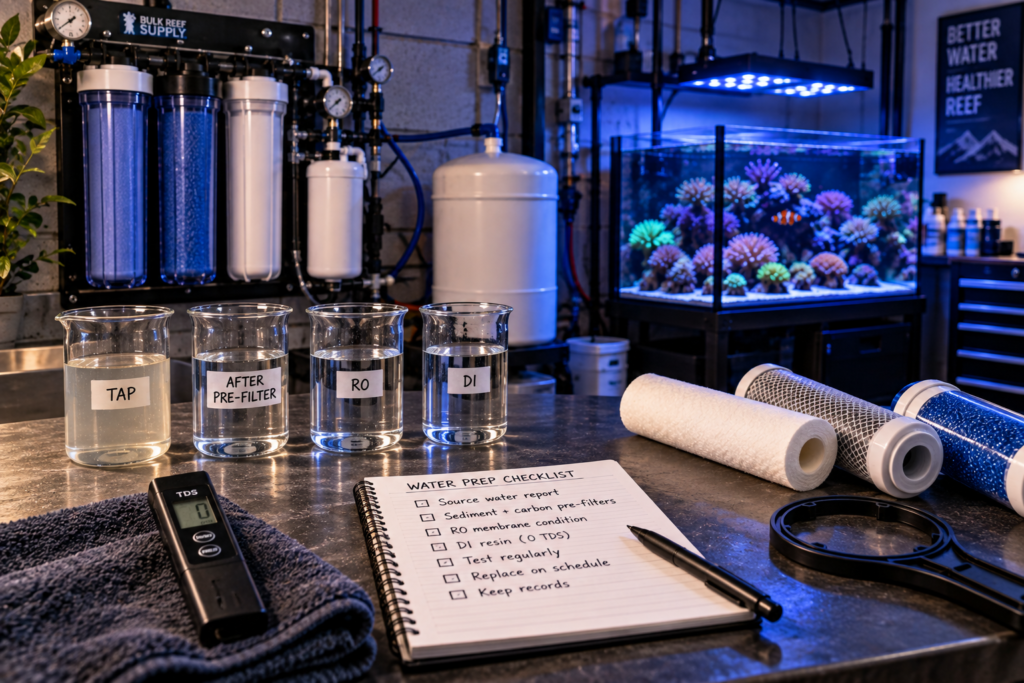
The bottom line
Chloramine isn’t something to be alarmed about, it’s a normal, safe part of how Oklahoma City treats its drinking water, and the City meets federal and state standards for it. But it does mean a reef aquarium here needs real carbon capacity, not just a token prefilter, and it means you can’t rely on TDS alone to tell you your water is ready for the tank.
If you want your carbon staging and service schedule matched to your actual water rather than a generic national recommendation, that’s part of what a reef assessment covers.
Request a reef assessment Reef aquarium maintenance in Oklahoma City
Sources
- U.S. Environmental Protection Agency "Chloramines in Drinking Water" — supports the definition, prevalence ("more than one in five Americans"), history of use since the 1930s, and the direct EPA guidance that chloramine must be removed before use in aquariums because the ammonia it contains is toxic to fish and enters directly through the gills.
- City of Oklahoma City, Water Utilities Trust Drinking Water Quality Report — supports Oklahoma City's use of chlorine and ammonia (chloramine) as its disinfection method.