Oklahoma City Tap Water and Your Reef Aquarium
Last verified
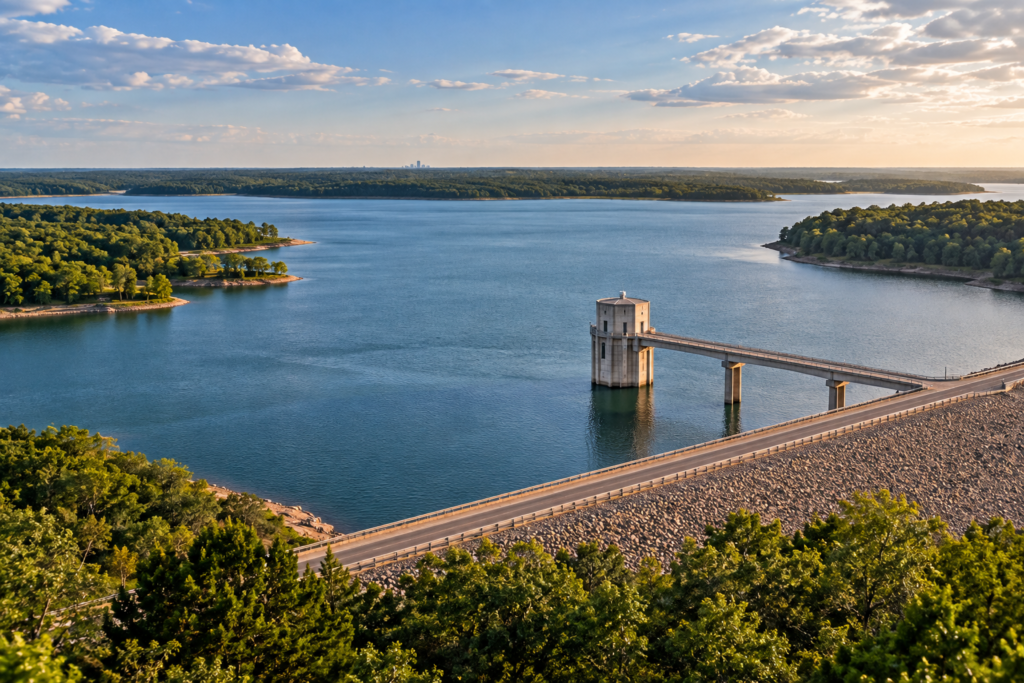
Oklahoma City doesn’t draw its water from one place. It runs two separate treatment plants pulling from reservoirs roughly 250 miles apart, and the finished water that reaches your tap depends partly on which one serves your part of the city. If you keep a reef aquarium here, that single fact is worth understanding before you assume your RO/DI system should behave exactly like a friend’s across town, or exactly like the generic advice you read on a national reef forum.
Where the water actually comes from
According to the City of Oklahoma City’s Utilities Department, the water supply is sourced from five reservoirs spanning nearly 250 miles from northwest to southeast Oklahoma: Canton Reservoir in the northwest, and the Atoka and McGee Creek Reservoirs in the southeast, feeding into the Hefner and Stanley Draper Reservoirs here in the city. Water from the southeastern reservoirs travels through the Atoka pipeline, built in 1962, to the Stanley Draper Treatment Plant. Water from Canton flows into the North Canadian River and on to the Hefner Treatment Plant.
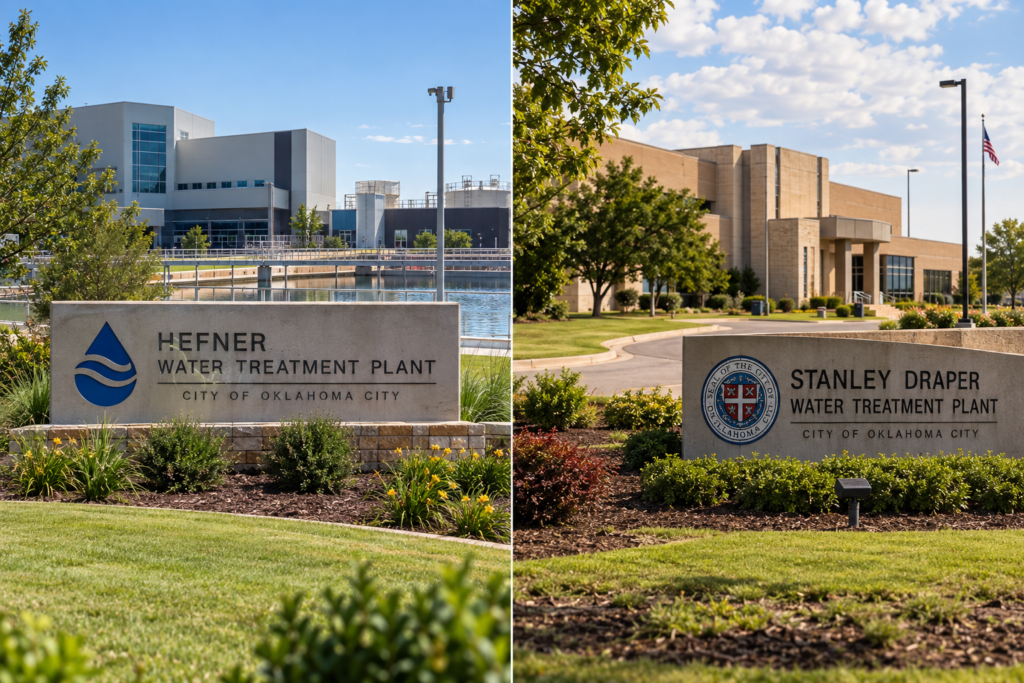
Two treatment plants, two different watersheds, one city. Hefner generally serves the northern part of Oklahoma City, and Draper generally serves the south, though the city has not published a precise boundary, and it can shift somewhat depending on demand and system pressure. If you’re not sure which plant serves your address, the practical answer is simple: test your own tap water rather than assuming.
how to actually check and manage your feedwater
Why two sources means water that isn’t identical
Water picks up dissolved minerals from the ground and rock it travels over on its way into a reservoir. Canton and the North Canadian corridor sit in a different part of the state, geologically, than the Atoka and McGee Creek watersheds in the southeast. That means the raw water reaching the Hefner plant and the raw water reaching the Draper plant aren’t starting from the same baseline, and the two plants treat their water somewhat differently as a result. Notably, only the Hefner plant uses ozone as part of its treatment process, which is one of the more visible differences between the two systems.
For drinking water, none of this matters much, both plants meet the same federal and state safety standards, and the City’s most recent Consumer Confidence Report showed zero drinking water violations for the year. For a reef aquarium, though, “safe to drink” and “ideal feedwater for RO/DI” are different standards, and the honest answer is that the mineral content, hardness, and overall load on your RO/DI system can vary somewhat depending on which side of the two-plant system supplies your tap. If you’ve ever compared notes with another OKC reefkeeper and found your RO/DI performance doesn’t quite match theirs, this is very likely part of why.
Chloramine: The other big variable
Oklahoma City disinfects its water with chloramine rather than plain chlorine. This matters enough for reef aquariums that we’ve given it its own page.
why chloramine matters for your tank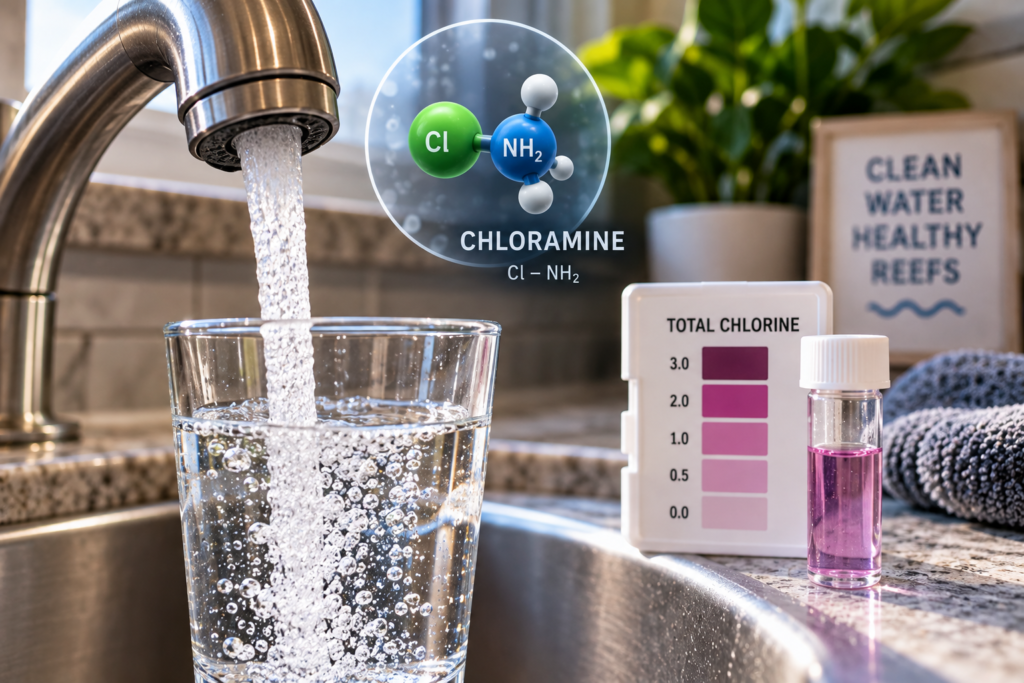
Water quality isn’t static (and that’s normal)
Municipal water systems are managed, tested, and adjusted continuously, and conditions can shift for perfectly ordinary reasons: seasonal changes in the source reservoirs, planned maintenance, or, occasionally, short-term events. In August 2026, for example, the City responded to reports of discolored water in part of the Draper service area, traced to naturally occurring iron and manganese, and adjusted treatment accordingly. Events like that don’t happen often, and they’re not a sign anything is fundamentally wrong with the water supply, but they’re a good reminder that “my tap water” isn’t a fixed, unchanging input. If your tap water looks or smells different than usual, it’s worth pausing before you make a batch of RO/DI water rather than running it straight through.

What this actually means for your tank
You don’t need to become a municipal water expert to keep a healthy reef here. You need three things:
- Know roughly where your water comes from. If you’re in Oklahoma City proper, it’s Hefner or Draper, depending on your area, and if you’re unsure which, a simple TDS reading off your own tap will tell you more than guessing.
- Treat your RO/DI as something to monitor, not set and forget. Because feedwater here isn’t perfectly uniform, service intervals that work for one address won’t necessarily match another. Running an RO/DI system in Oklahoma City
- Know your disinfectant. Chloramine treatment needs different pretreatment than plain chlorine, and it’s worth understanding before you buy filtration. Chloramine and your reef aquarium
If you live outside Oklahoma City proper, Edmond, Nichols Hills, The Village, Piedmont, or elsewhere in the metro, your water situation may be built entirely differently, since several surrounding cities run their own wells or blend their own supply with Oklahoma City’s.
How water compares across the Oklahoma City metroThe bottom line
Oklahoma City’s water supply is well-run and well-tested, but it isn’t one single, uniform input the way reefkeepers in a smaller single-source city might assume. Knowing that — and knowing to check your own tap rather than relying on someone else’s numbers, puts you ahead of most of the advice you’ll find online.
If you’d like your actual feedwater checked and your system set up to match it, that’s part of what we do on a reef assessment.
Request a reef assessment Reef aquarium maintenance in Oklahoma City
Sources
- City of Oklahoma City, Water Utilities Trust "About Your Tap Water" — supports the two-plant structure, reservoir sources, and Atoka pipeline description.
- City of Oklahoma City 2025 Drinking Water Quality Report / Consumer Confidence Report — supports the zero-violations compliance status and chloramine disinfection method.
- KFOR News "City of OKC releases 2025 drinking water quality report" (kfor.com, July 2026) — supports the CCR release and compliance summary.
- City of Oklahoma City News release on Draper Water Treatment Plant service area discoloration, August 24, 2026 — supports the iron/manganese discoloration event description.